
Bullets stopped him mowing lawn
A ‘This Week’ crew head into the middle of a revolution
‘The whole report was in many ways a model of its kind’ – Monica Furlong, Daily Mail.
‘It happened, as most good topical TV features seem to happen now, on ITV’s “This Week”’ – Daily Mirror.
Fusion thought it might be interesting to learn just how these eulogies about a “This Week” item on Santo Domingo were earned. So here programme director PETER ROBINSON tells how bullets stopped him mowing his lawn.

Emotionally, at least, it all began with a satellite called Early Bird, a tune called, ‘Hey, Look Me Over’, ‘whooping’ red Indians, a New York restaurant where the waitresses didn’t wear too much, and my lawn at home in Epsom.
Early Bird was my reason for crossing the Atlantic on April 21 – to film and make technical arrangements for Rediffusion’s first programme via the satellite. It was called ‘Tonight in America’, and was transmitted on May 3, at 6.00 p.m., New York time, 11.00 p.m. in London.
‘Hey, Look Me Over’, was the title music for the show – a catchy, exhilarating tune, chosen by Cyril Bennett, the producer.
The ‘whooping’ red Indians were what we heard every time we cut to George Ffitch, on the steps of the Capitol in Washington during rehearsals – a totally inappropriate noise, funny at first, then more jarring and frightening as we came nearer and nearer to transmission time. We were connected soundwise to a Western being screened for early evening viewers! The American Broadcasting Company who provided the technical facilities did a swell job, including laying on the OB unit in Washington at 3.00 a.m. that morning, but things go wrong in the best regulated families. So we heard George’s voice only during transmission.
The restaurant with the sexy waitresses was where we went to celebrate the successful transmission of the programme in a great wash of relief and self-congratulation. It was also the place where Russell Spurr, Bryan Fitzjones and I were asked by Cyril Bennett, sober, whether we’d like to do a film piece on Santo Domingo for ‘This Week’- transmission May 13.
My lawn in Epsom was my conscience, and my therapy for the last two weeks’ work in Washington, Philadelphia and New York, the scenes of the Early Bird programme. That programme had also contained the latest news film from the Dominican Republic – a distant nebulous place, now looming large as my lawn receded.
Tuesday, May 4 – Russell took off for San Juan, Puerto Rico, the nearest airport to Santo Domingo to which the airlines now flew. I spent the day in New York buying suitable clothing for the location and trying to obtain a film crew from ABC. In the evening Russell phoned – San Juan was lovely, big hotels, swimming pools, beaches, palm trees, but Santo Domingo didn’t sound so good. Please purchase water bottles, tin plates, knife, fork, and spoon for the crew and ourselves.
Wednesday, May 5 – Bryan and I had a long conference with Jeremy Isaacs in London about the storyline and the plans for the location. Bryan was to stay in New York and do the dull and thankless job of maintaining contact with London and San Juan (whence we would send messages and exposed film), arranging interviews if necessary in Washington, and searching out historical library film. Then Jack Busch of ABC called to say that he had a crew. It had been difficult finding one – Morgan Smith (sound), Manny Longueira (camera assistant) and Ralph Mayher (cameraman).
Thursday, May 6 – at 6.30a.m. Russell and I met the crew at the naval air base at San Juan. As well as finding out the latest news from Santo Domingo and the conditions in the city, Russell had arranged with the US marines for a flight in one of their Navy Transport DC 4s. We met in a hangar together with three press men, one of whom was Roy Perrot of The Observer, and several members of the Organisation of American States, who were to travel with us. It was a self-conscious meeting. We were all tired, breakfastless and unshaven – none more so than Mayher, who had the beard as well as the stature and visage of one Fidel Castro. He wore an American field uniform and flashes on his shoulders labelled Vietnam. Apart from Russell and I none of us knew each other, or quite what we were in for. The marine colonel, Buffkins, informed us that we were going to a city where a ‘shooting war’ was going on, did we understand? Yes, we were beginning to. Here were our travel documents, which would entitle us to pass freely in the American security zone when we got there. They were important and should be carried at all times. On the one hour and 20 minute flight I tried to get acquainted with the crew, and to explain our methods of working. Ninety per cent of our shooting would be hand held, nothing would be set up or staged, and there wouldn’t be time for the usual pleasantries of light readings and sound levels. They understood. Mayher was used to it that way, Morgan Smith less so. We had three cameras, a 400-ft Auricon (for sound filming) with shoulder pod and a 100-ft Arriflex and a Bell and Howell for silent; also a small tape recorder for wild tracks. The two cameras not in current use must be kept loaded at all times, each film roll must be slated, and I would keep rough continuity sheets. ‘All righty.’ But had we got a script? No, we hadn’t got a script, but Russell would fill them in on the situation. From 1930 to 1961, the country had been ruled by the dictator, Rafael Trujillo, who, backed by the army and the big landowners, made millions for himself and his family. He was feared, hated and eventually assassinated. Chaos reigned and the rest of the Trujillo family were thrown out. A series of stop-gap governments followed, but in 1962 democratic elections were held for the first time in 30 years and Juan Bosch won a landslide victory. Bosch, a left of centre reformer, had been exiled for 25 years – now he was President. But the vested interests which prospered under Trujillo cried ‘communism’ – a military coup and Bosch was out, exiled again to Puerto Rico. A military junta took over and, in 1963 a motor car salesman, Donal Reid Cabral, backed by the army, and principally by General Wessin y Wessin became boss. On April 25, a group of younger officers, including Colonel Caamano, rebelled. They overthrew Reid Cabral and captured Santo Domingo, the capital. On the following day the Dominican air force under orders from Wessin y Wessin bombed the military barracks and the Presidential Palace. Several civilians were killed including a six-year-old child. This more than anything else probably accounts for the hatred that the Dominican people felt for Wessin y Wessin and his junta.
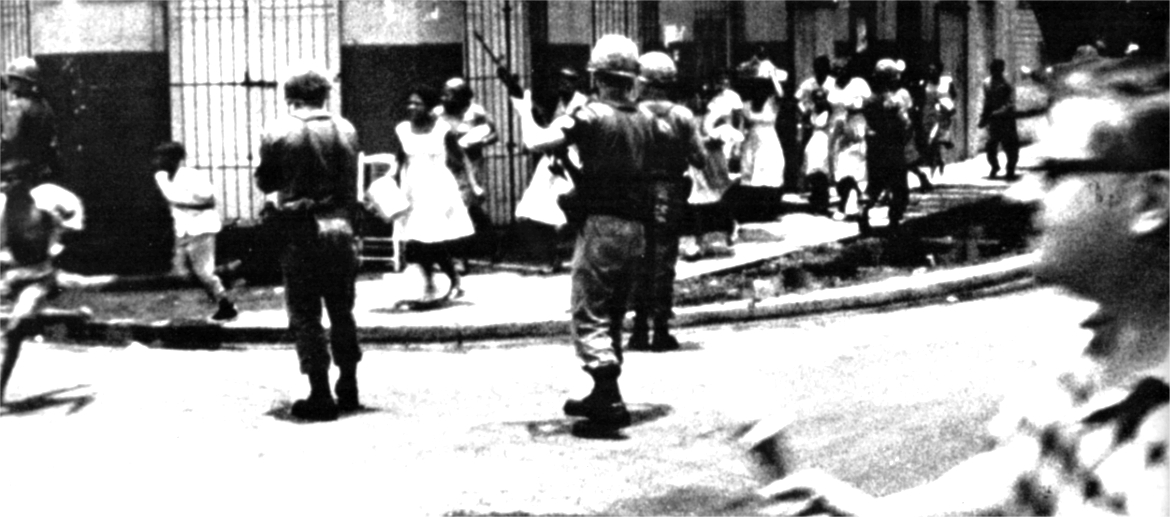
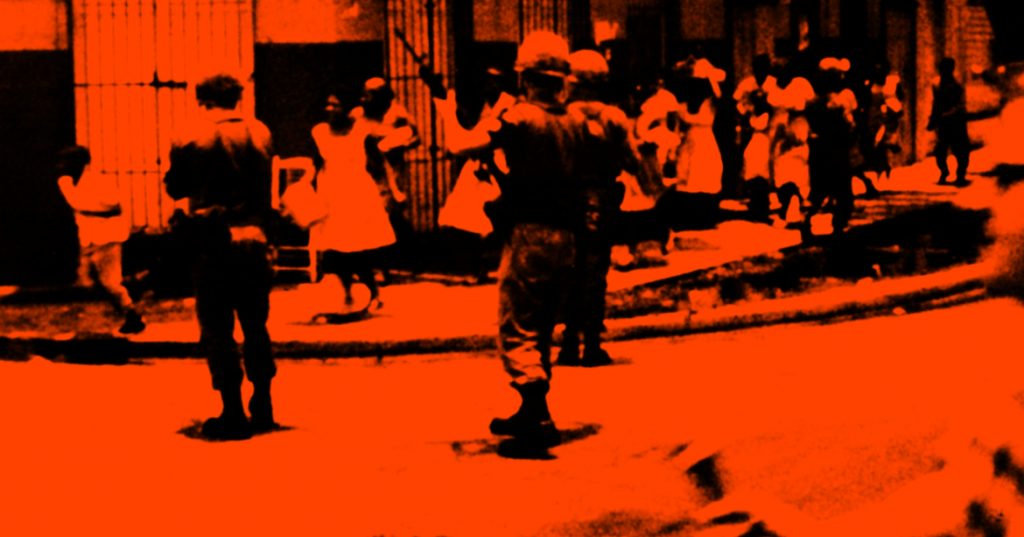
The biggest airlift since Berlin brought thousands of American airborne troops into the Dominican military base at San Isidro, and from there they linked up with the seaborne marines. Already there were more American service men in the Dominican Republic than in Vietnam. We had heard President Johnson in a television broadcast while we were in New York say: ‘We support no single man, or no single group of men in the Dominican Republic. Our goal is a simple one; we’re there to save the lives of our citizens, and to save the lives of our people. What began as a popular democratic revolution moved into the hands of a band of communist conspirators.’ However, the impression of the Dominican people and of the majority of the press was different. They felt that although the Americans had undoubtedly prevented a massacre they were patently siding with Wessin and the military junta against the ‘rebels’, or the ‘Constitutionalists’ as they call themselves.
The Americans had carved a military corridor which connected San Isidro airbase (where we were to land) with the Security zone around the new diplomatic quarter on the other side of Santo Domingo. This corridor cut straight through the rebel-held part of the city and the bulk of the rebel forces were penned into about two square miles of the business quarter. Already about a thousand soldiers and civilians had been killed and another thousand wounded.
When we landed at San Isidro the evidence of what Russell had said began to confront us – planes of every type; hundreds of American troops on foot and in jeeps and many others, just flown in, dossed down in the nearby hangars. We decided to try to reach the El Embajador Hotel, about 15 miles away on the other side of Santo Domingo, where we were to be accommodated with the rest of the press and television, as soon as possible. We spoke to a young US lieutenant … there would be no transport for at least two hours … OK, we’d start filming here … how about some food and a jeep in which to get round the airbase? Grab what you can – we did.
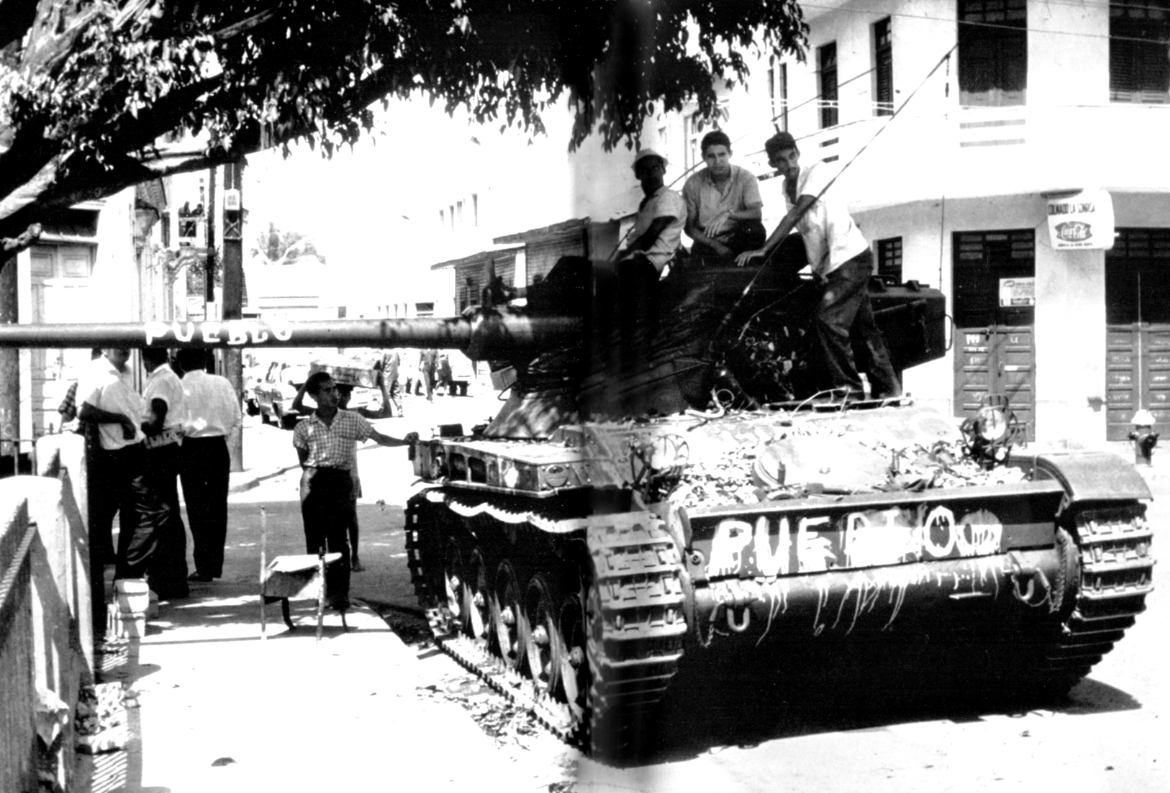
The bus to take us to the hotel was a beat-up old vehicle with all the outward appearances of a colander – it had been shot up two days before. As we moved off, Ralph saw an American pick-up, and confirmed that it was going to the hotel, jumped into the open tray in the back and filmed all the way into and through the city. The scenes were fantastic, soldiers everywhere, every kind of equipment from artillery to field hospitals, and then more troops and the occasional tank or armoured car on the shanty town street corners … the poor Dominicans trying to lead some sort of day-to-day existence, and children playing with the spent shells of yesterday’s sniping. At the hotel, the scene was equally bizarre. Surrounded by soldiers and guns, refugees, with their children and odd belongings, shacked down on the patio and in the central lobby. We went to the reception desk … there were no rooms. On to the military press office just down the corridor. We explained who we were. Yes, we could have one room for the five of us and our equipment … they would try to find others. They needn’t have bothered, Russell was in his element. Familiar faces appeared everywhere, old press friends from Korea, Vietnam, Malaysia … he’d been around the trouble spots of the world. Within half an hour he’d got promises of four more rooms by nightfall … requisitioned half a hundredweight of American ‘C’ rations and, since everyone else was drinking the hotel swimming pool, six Coca Colas – there’d be more later. As well as being an admirable quartermaster, Russell had also made his contacts to get filled in on the story on the ground. He set off into the city, and the crew and I filmed scenes in and around the hotel, ending with a military press briefing, one portion of which sounded ominous: ‘This morning at approximately 10.30 Al Burke and Doug Kennedy of the Miami Herald were wounded when they were caught in the cross fire between a US and rebel outpost. They were returning to the US line from the rebel-held section of the city when the rebels commenced firing … I want to say that all members of the American press here have repeatedly risked their lives in an effort to report fully to the people of the world all facets of the political and military situation. The tragic and unfortunate wounding of these two men should point out to everyone in the world who listens to a radio, reads a newspaper, or watches television, of the outstanding job that you courageous people are doing.’
That evening, we sat in a bedroom in the semi-darkness – the electricity flickered on and off – canning up the day’s exposed film, writing continuity sheets and deciding what to do next day. Russell had made several contacts, including one in the rebel sector, who had agreed to take us to Caamano, the rebel leader. The crew did not show immediate joy at the prospect of this. What safeguards did we have? What about the two press men who’d been shot that morning? True, but many others hadn’t been shot. First we must get a car, and write ‘press’ all over it in large letters, then, when we’d got to the rebel zone, we’d drive very slowly, five miles an hour, to the place where we were to meet our contact. Once with him we’d be OK. The crew were happier, but still sceptical. Two would go, one was doubtful. OK, sleep on it. We arranged with one of the taxi-drivers outside the hotel for a fat price to have him and his car for the next three or four days.
Friday, May 7 – we met William, our driver, at 7.00 a.m. – all of us. He drove us to the edge of the rebel sector, explained how to get to our destination, got out and suggested that we drove ourselves from now on. Russell drove, we smiled and waved out of the windows at the suspicious looking civilians and scrappily uniformed rebels standing about in doorways and at street corners. After five minutes we were lost. We decided to stop, and I got out and spoke to a rebel holding an old carbine. He looked no more ferocious than any of the others we’d passed, but he never actually took his finger off the trigger. After a short conversation in pidgin-Spanish, many protestations that we were Inglese and not bloody Yankees, he ordered two youths to come with us and show us the way. Beside the building which was our rendezvous, the two boys pointed proudly to an American jeep which had been captured the day before. The three Americans who had been in it were now prisoners, they said. We were shown up and met Russell’s contact, who thankfully spoke English. After much palaver and explanation that we were from English Television and wished to present both sides of this unhappy story equally fairly, it was agreed that we should see Caamano in the afternoon. The fact that the three members of the crew were obviously not Inglese (although Ralph had now shed his conspicuous field uniform which we had persuaded him would be a sure target for every rebel rifle) proved something of a drawback to begin with. However, once it was understood that they were merely a technical crew working for English Television, all was well. We were welcomed warmly and asked what we would like to film during the remainder of the morning. First we would like to look around the rebel sector, film whatever scenes seemed interesting, and interview our English speaking contact.
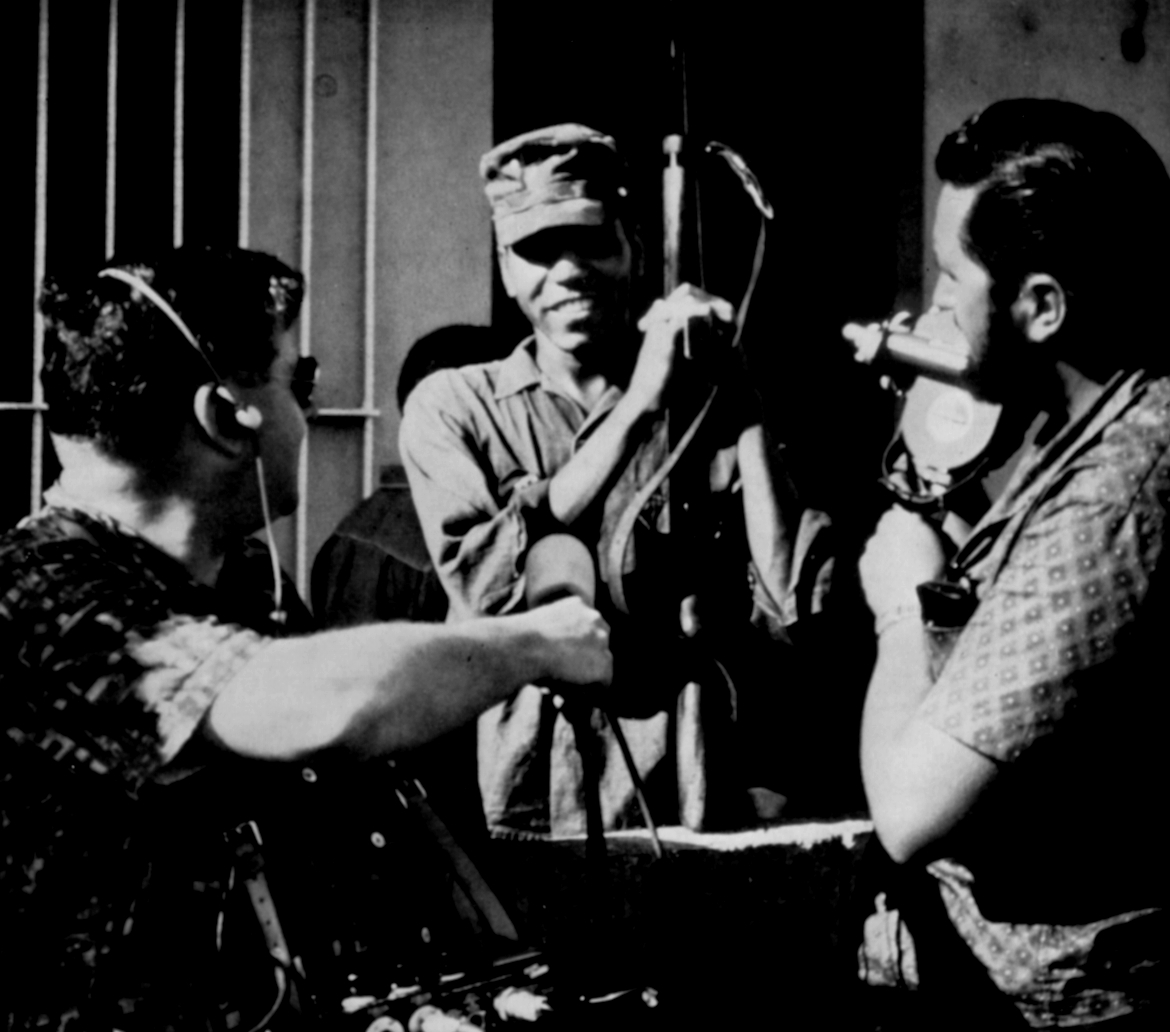
The poverty of the place at the best of times was obvious and shameful. Add to that days of accumulated rubbish piled high in the middle of every street … a grotesque charred body lying on a pavement (they couldn’t bury all the dead) … battle-scarred buildings … shot-up or burnt-out vehicles standing about like so many deserted waifs … children of 14 carrying rifles (the new-found symbols of their manhood) … starving dogs and sounds of intermittent gunfire … and you have a Caribbean city under revolution. We turned a corner near the sea-front. A hail of shots surrounded us. Our contact, Hugo, was first out of the car and into a nearby building … we followed. We were greeted by our hosts with peels of laughter … there must have been a funny side to it … and, as we were soon to find out, the population had become so used to gunfire that they no longer considered it worthy of much excitement. Several times we poked our heads out of the door in an effort to see who was shooting at whom, but without much success. We decided the situation was too good to miss, and after finding a way out of the back of the building, we clambered over a wall and into a street running at right angles to the one where the firing was going on. We were protected by the buildings on our left and could see the bullets striking another building with a Red Cross flag on it about 20-30 yards away. The marines, it appeared, were firing at some rebels in the building and one had already been shot in the stomach. I decided that this was the time and place for Russell to interview Hugo. The result was unusual – Russell and Hugo in the foreground, Hugo protesting violently that he and the other rebels were not communists but Constitutionalists who only wanted free elections and a return to democratic government. In the background there were American bullets hitting the Red Cross building, and on the corner, just behind Russell and Hugo, a little cluster of rebels firing back. Every now and again another rebel would run across the street to join them, and across the way, one over-exuberant Dominican was carrying on a private war running backwards and forwards firing from behind a tree. The interview continued for about eight minutes, including two magazine changes, and then Russell also did a camera statement crouched down on the pavement beside the rebels.
In the afternoon we went to see Caamano. We had to pass six guards on the way into the dingy headquarters, and were frisked twice. We had a drink, some dreadful pink liquid, tried to collect our senses, and filmed a few minutes of the shambolic press conference which was going on. Eventually, when it had ended, we got our interview with the rebel leader – an extraordinary interview punctuated by the personal interpolations of his Minister for State, who was also acting as Caamano’s interpreter.
News travels fast in situations like this, and that night at the hotel there was much envious rumour and gossip of our scoop of an interview with a rebel under fire that morning. We were all delighted, and felt that while we had been lucky, we had got it because we had gone it alone, rather than filming with the main pack of camera crews who stayed together most of the time. The crew were as delighted as we were, but felt that we’d pressed our luck far enough. Russell and I agreed that we seemed to have covered the rebel zone and that there should be no need to return.
Saturday, May 8 – Manny, the camera assistant, went down with ‘gyppy tummy’. Russell went off to arrange interviews with the American Ambassador and the head of the local Peace Corps. I took Ralph and Morgan filming along the corridor and in the security zone – Junta troops, US marines and strongposts, military convoys, checkpoints, a mobile Red Cross unit. On the way back Ralph sat on the bonnet of the car hand-holding the Auricon, for a 10-minute tracking shot through the centre of the town.
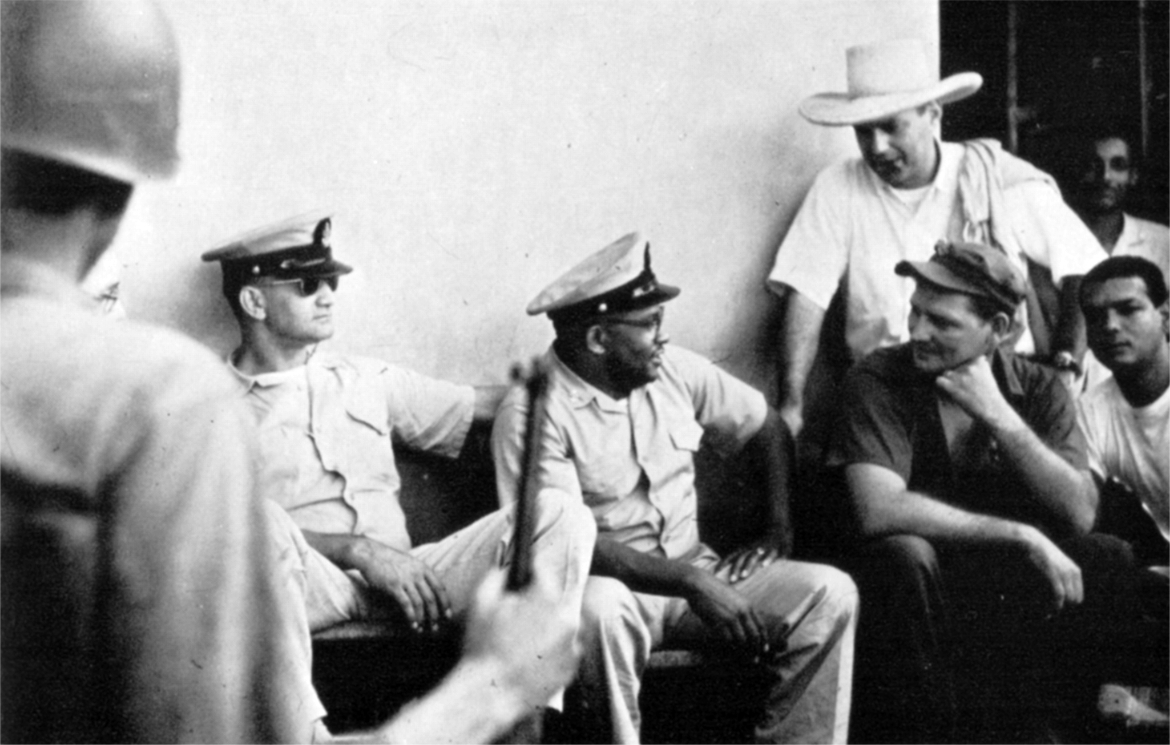
We met Russell at the American Embassy. The Ambassador was unfortunately engaged. OK, we’d do the Peace Force. Robert Satin, the local head, had set up his HQ at a school two miles away. He’d be delighted to talk to us, but some other time. He was on his way to the rebel zone to relieve three captured American service men. Could we go, we asked? Yes, but only three could fit in the car. It was decided that Russell, Ralph and myself would go, taking Morgan Smith’s sound gear and leaving him to guard the remaining equipment with the driver. Satin, a romantic Pimpernel figure in a large Spanish straw hat and yellow cape to make him easily distinguishable, was the only man in Santo Domingo whom both sides trusted, and who could, therefore, undertake a mission of this kind. An American himself, it would be fair to say that he was not entirely uncritical of the American position in Santo Domingo. We were soon with the rebels, but not until our papers had been checked and our purpose explained would they lead us to the prisoners. On the way, as we walked through one of the rebel-held streets, one of the leaders tried to explain the rebel cause to Russell in Spanish. Satin interpreted, and we filmed as we went. The rebels here were so courteous and obviously sincere that one could not feel other than sympathetic towards them. Perhaps my early West Indian upbringing – I lived in Trinidad till I was 14 – made for a certain affinity.
The three prisoners, two petty officers and one private would say little to us, understandably. They gave us their names and confirmed that they had been well treated. The atmosphere between them and their captors was friendly, and one of the rebels complained that the only trouble they’d had was that the little fat petty officer ate too much. We stayed there at Cuccaraca 20, the name of the rebel headquarters, for about three hours, while they tried vainly to contact their main headquarters for permission to release the prisoners to Satin. The lines were blocked, no communication was possible. We suggested sending a runner, it was only two miles away. That would mean their man crossing the security zone, a risk they were not prepared to take. Could we do it for them? ‘No’, they said, it was too risky, and it was getting dark. We should really return to the security zone at once. The prisoners would have to wait for their release until the next day. As we were filming a final camera statement outside Cuccaraca 20, a rebel arrived to say that a junta 50mm machine gun was trained on the street where we were, and that a large number of rebels were ready to return fire from a building just across the street … we really should go. We did, but after 20 minutes’ driving we still could not get out of the rebel zone, barred everywhere by road blocks. Eventually we came full circle, and the members of Cuccaraca 20 undid a road block to let us out. That really was our last visit to the rebel zone, but not the end of the excitement for the day. As we neared the American Embassy, we ran into some sniping, which caused Satin to take to a side street. At the Embassy, American troops were active, kneeling behind trees, and taking up positions of advantage. It seemed mild compared to the events of the last two days. I sat on the Embassy steps investigating a blistered toe. A medical orderly insisted on disinfecting and bandaging it. The humour of the situation did not strike him.
That night, Russell and I took stock of what we had, and decided that next day he would film the re-arranged interview with the American Ambassador, and an opening camera statement on the border between the security zone and the rebel zone. I would catch the morning plane to San Juan and thence home to London to help identify and assemble the film. Russell would catch the evening plane, film an interview with Juan Busch, the ex-president, in Puerto Rico and then follow on to London too.
Sunday, May 9 – I missed my plane, the arrangements for transportation to the airport had been changed. When Russell returned to the hotel, having completed his filming, not without further incident (during his camera statement firing had again broken out, but he’d completed it nonetheless, and so filmed what must be the most unusual camera statement on record) we agreed that we would all take the evening plane. Back in our luxurious hotel in San Juan that evening, a bath, clean clothes, and a good meal at last in the penthouse restaurant from which there is a view of the whole city.
Monday, May 10 – 7.00a.m. call. ‘Breakfast is nerved by the swimming pool.’ What am I going back to London for?
3.00 p.m. – ABC New York – where all the in negative film was processed before shipment to London – ‘It’s good quality, you’ve got a humdinger’.
6.00 p.m. – a drink and a chat with Bryan FitzJones. ‘New York’s been in the nineties, Jeremy wants me to stay here till tomorrow. I’ve booked your flight, a BOAC VC 10, take off Kennedy Airport 9.30 tonight.’
Tuesday, May 11 – 9.45 a.m. – landed London Airport. I still had a wife – or perhaps she still had a husband.
11.00 a.m. – back at the mill (TVH) … rushes at 3.00, everyone delighted, but feel flat.
Wednesday, May 12 – more rushes – rough cut – script conference – rough cut. Jeremy and I left Peter Mills and Roy Jordan, the editors, to it at 3.00 a.m. on Thursday – transmission day. They worked all night.
Thursday, May 13 – 8.00 a.m. See another rough cut. Russell back … discussion … another cut … Jeremy asks Cyril Bennett for an extra five minutes on the running time … OK, 31′ 30″ it is. Finalise picture, Russell writing commentary … recording commentary … laying tracks … dubbing … Freddie Slade has to do it without rehearsal, take first time. Somehow the him gets on the air with five seconds to spare. Thirty-one minutes later we’re on the Hollywood Crawl – roller caption in American jargon – and that’s where it all began.
Saturday, May 15: I still have a lawn – I’m mowing it – a friend calls. ‘How’s the telly?’
‘Fine.’
‘What are you working on?’
‘This Week.’
‘That’s on a Thursday, isn’t it?’
‘Yes.’
‘What do you do the rest of the week?’
About the author
Peter Robinson was a staff director at Rediffusion


