
Ready, Steady, Go!
Two features aimed at teens explaining a bit about the behind the scenes work at their favourite show
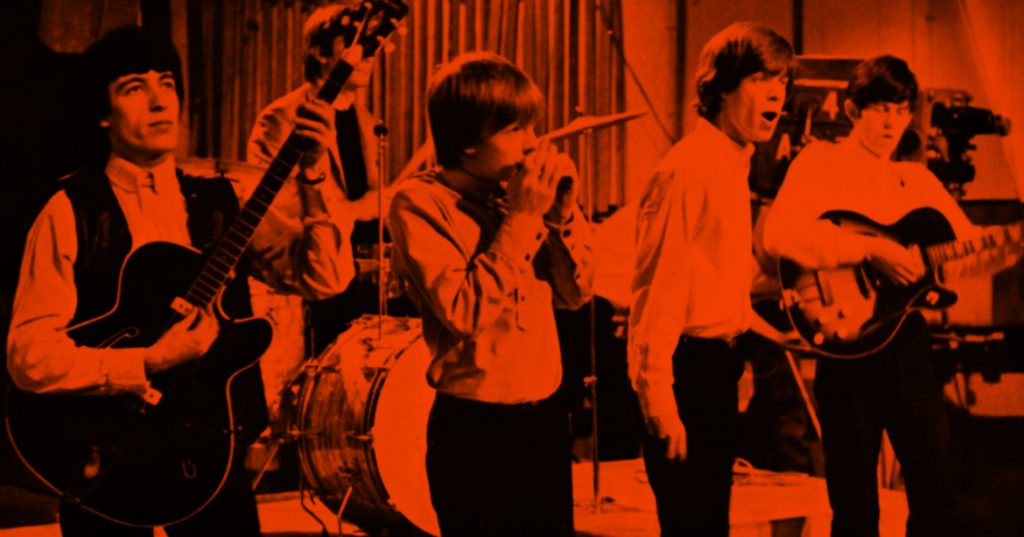

March [1964] saw the publication of a ‘Ready, Steady, Go!’ magazine for sale to the general public. Designed by John Tribe of Graphic Design and edited by Ronald Elliott, the 24 giant pages include six pages in full colour besides the front and back covers in colour. Price 2s; print order 200,000.
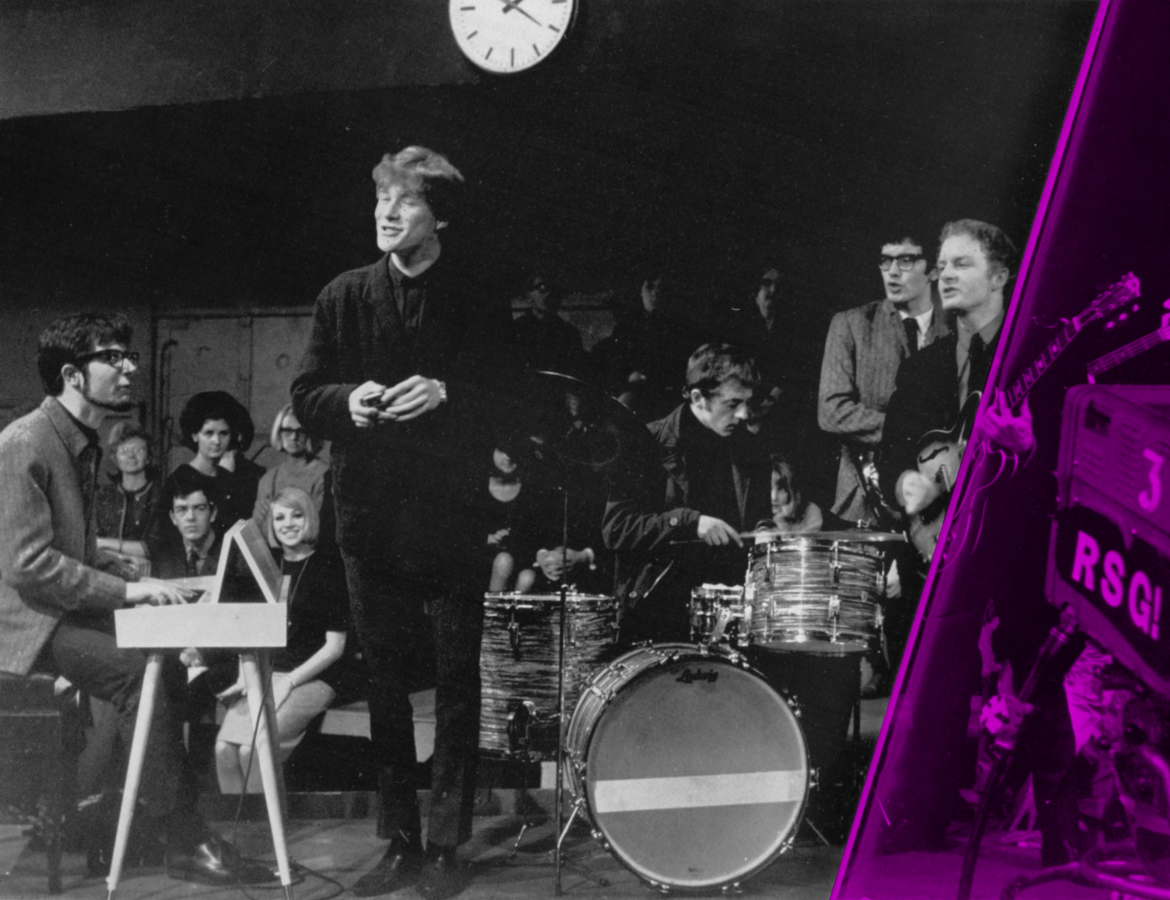
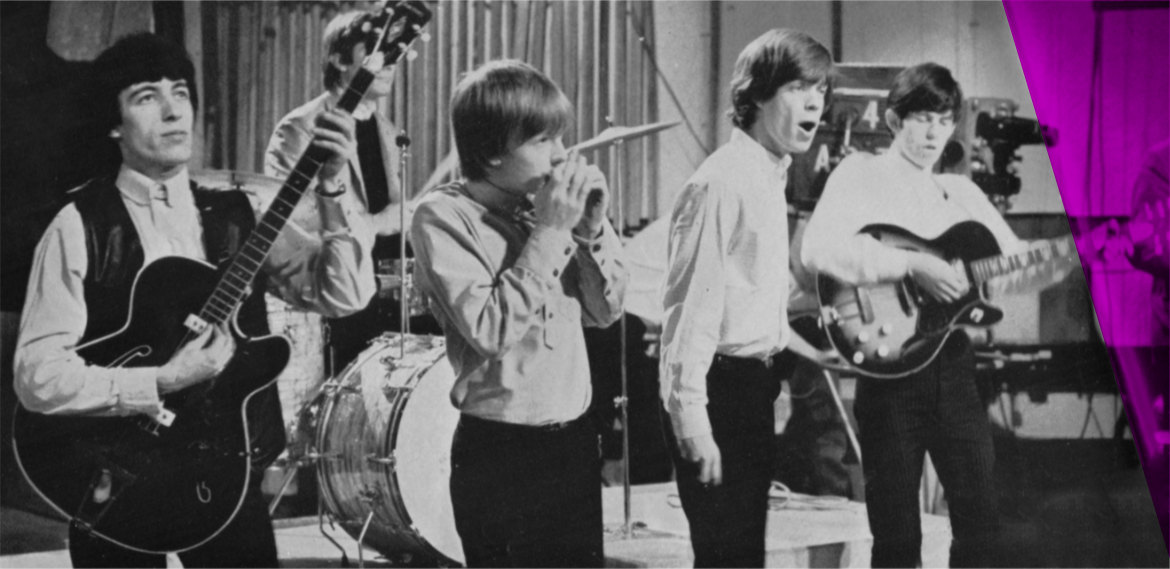
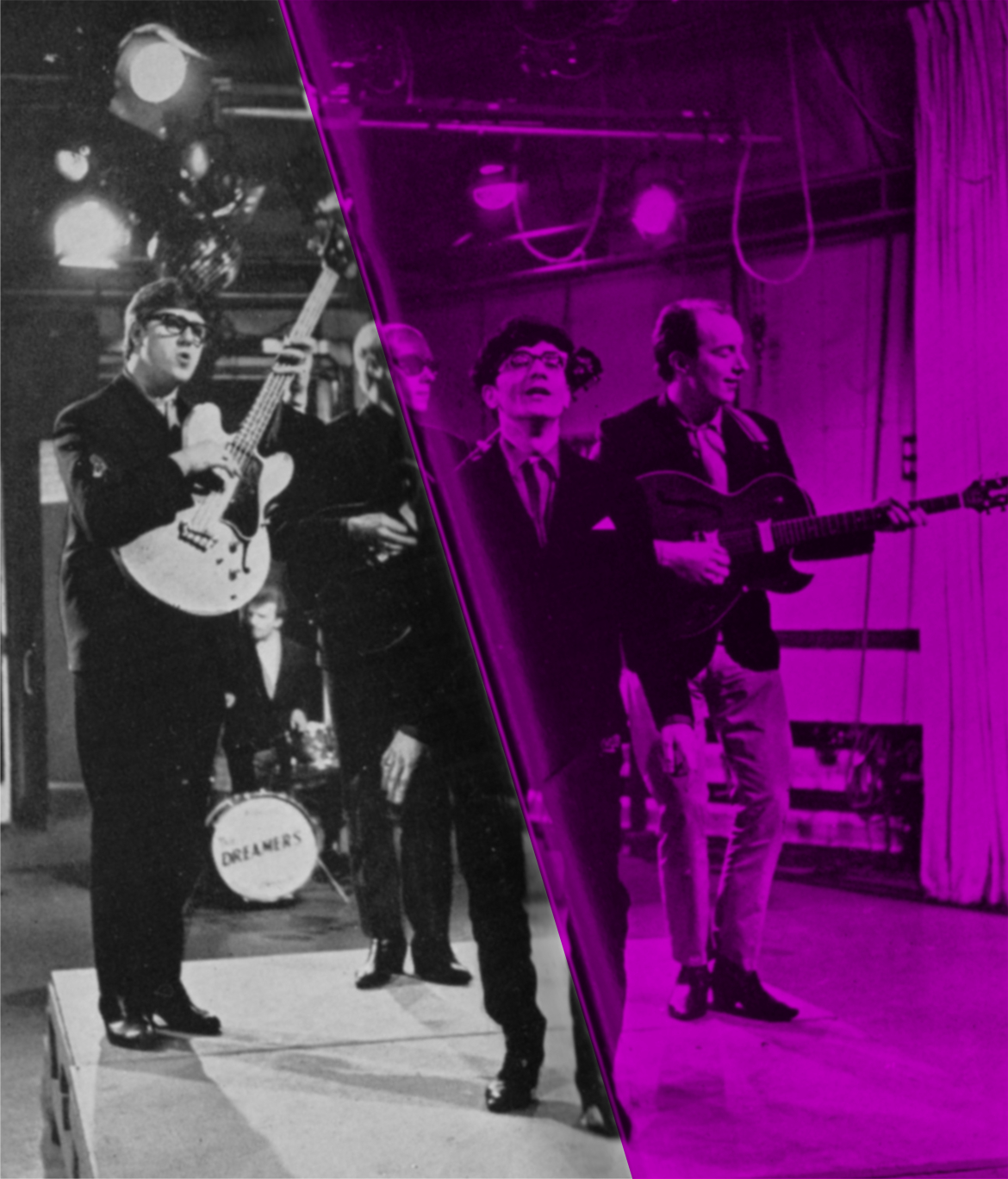
Twelve articles have been specially written for the magazine. Here Fusion reproduces a couple of them to give you the flavour, plus our own photographs of the first early eveing show to get consistently in the London top ten.
Our neighbours hate us
It sounds like a dream job – listening to records, but when you know your choice is going to be heard by millions it’s not so easy as it sounds. Here Michael Aldred, an assistant on ‘Ready, Steady, Go!’ tells how the discs are picked for the programme.
One of the most frequently asked questions about ‘Ready, Steady, Go!’ is how we pick the records that are played on the programme. If you imagine all we do is sit back in our chairs with our feet on the desk while the melodious strains of the Beatles, the Crystals or the Rolling Stones waft around us, you couldn’t be more wrong. It is a wee bit more frantic than that.
Each week the major record companies send us upwards of 50 new pre-releases. In addition, music publishers and agents send acetate demo discs of new songs and new artists for us to hear.
To be completely fair to everybody – ourselves included – we have to play every record, all the way through, both sides, often more than once. Then we can be sure we keep up with what is happening in the music world.
Decisions on a record are collective – Francis Hitching, my boss, Vicki Wickham, his personal assistant, Cathy McGowan and I discuss each record before accepting or rejecting it.
If you allow a minimum of four minutes for each record, it takes something like three hours or so of playing time to hear everything. And that doesn’t take in all the discussions!
So we have mad record sessions which drive the inhabitants of the neighbouring offices on the fifth floor of Television House slightly mad.
When we have decided on the records which we think have the right sound for the programme, we set about booking artists.
When we’ve got everything lined up for the week’s show you might think we relax. But you’d be wrong … we’re already making plans for the next week.

I pick the stars
What goes on behind a show such as Associated-Rediffusion’s ‘Ready, Steady, Go!’? In this article the programme’s editor, Francis Hitching, lets you into the secrets behind his job.
The first person we booked on ‘Ready, Steady, Go!’ was Billy Fury. In fact, he was booked before I got my own job! I arrived in the office on my first morning to be told that we’d got a star for the opening programme – Billy – and from there on it was up to me.
It’s a very pleasant job, I can tell you. With a couple of possible exceptions (and nothing anybody says will make me mention their names) pop stars are as nice a bunch of people as you’ll meet anywhere.
Lots of them genuinely seem to like ‘Ready, Steady, Go!’ – perhaps because it gives them a chance to do something more than just sing. They pop into our office and give us ideas for features in the programme, or suggestions for records they’re tipping for the top.
Brian O’Hara of the Rolling Stones, for instance, rang up the other day to tell us about some clothes he’d seen kids wearing round the clubs.
Dee Dee Sharp, when she’s in this country, tips us off about new dances in America.
Dusty Springfield and Kenny Lynch are regular visitors to our room on the fifth floor – they seem to like our office coffee!
When we’re building up a programme, we try to stick to some rules we’ve invented.
- The numbers should be a mixture of new ones and familiar ones. And ideally, we either try to play a record the first week it’s released – or when it’s got into our charts.
- Besides the stars, we ought to have at least one newcomer – or comparative newcomer – on each show.
- There ought to be a good, newsy reason for every record we play.
Because ‘Ready, Steady, Go!’ is a live show, were able to fit in extra items quite late. The week the Springfields broke up, we reorganised the schedule so they could do a medley of their best-known hits for a farewell performance the same week. When film stars like Pat Boone arrive unexpectedly in the country, we drop a number so we can fit in an interview with them.
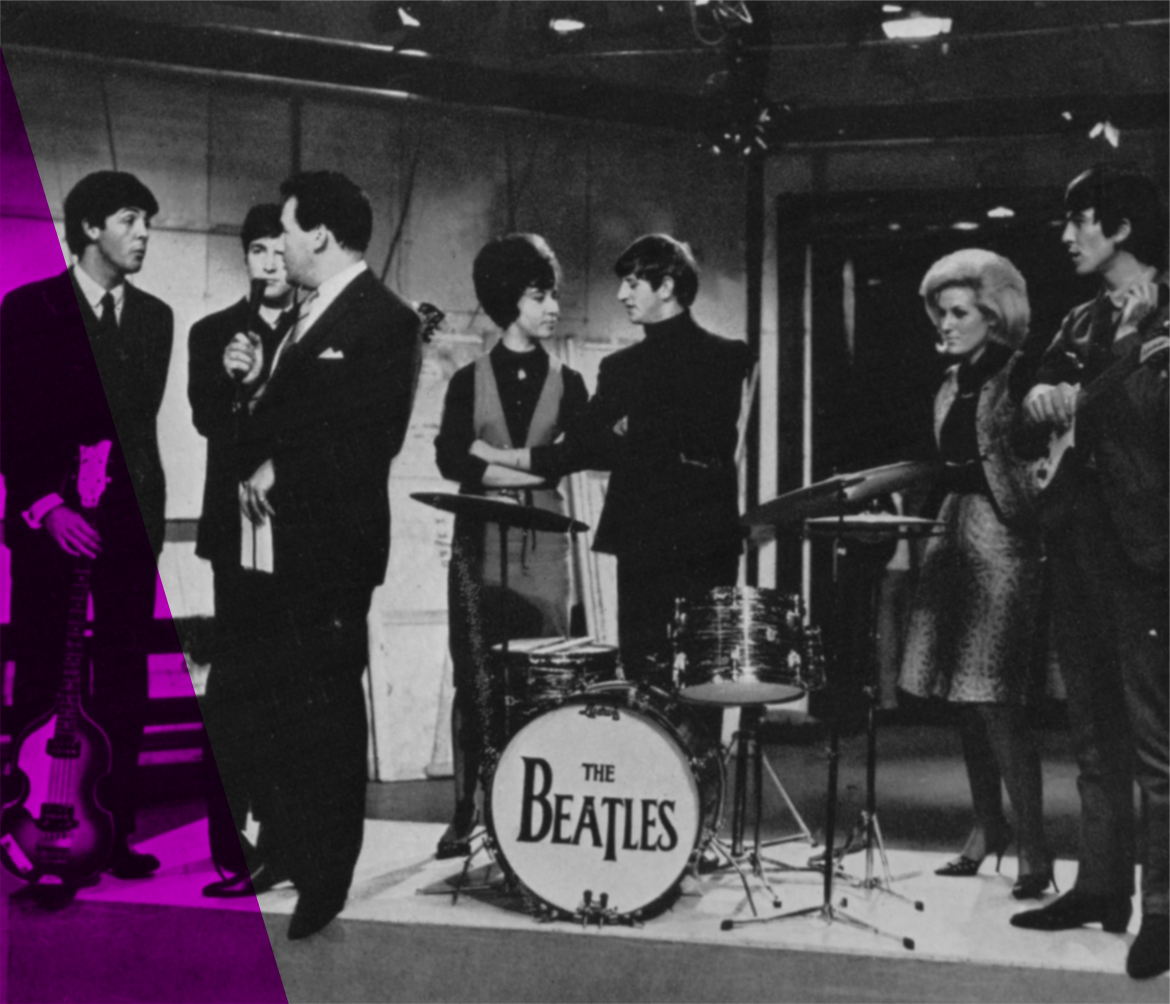
I think the stars like this sort of urgency. The Beatles came on the show expecting just to do a couple of numbers at the end of the programme.
But we’d had so many postcards from viewers – nearly 5,000 – that we decided to interview all four of them.
We also wanted Helen Shapiro to sing her number ‘Look Who It Is’ to each of them in turn. But when she ran through the song, it gave us a problem – there was only time for her to sing to three of the Beatles. Which one would we drop? In the end, it was Paul who stood down (with much grimacing and shouts of unfair). And as a consolation prize we gave him a spot on his own in which he picked the winner of the mime contest – who reckoned she was the luckiest girl in the studio that night.


