
We’re going to get up and GO
Rediffusion’s director of programmes answers questions about Rediffusion’s programmes
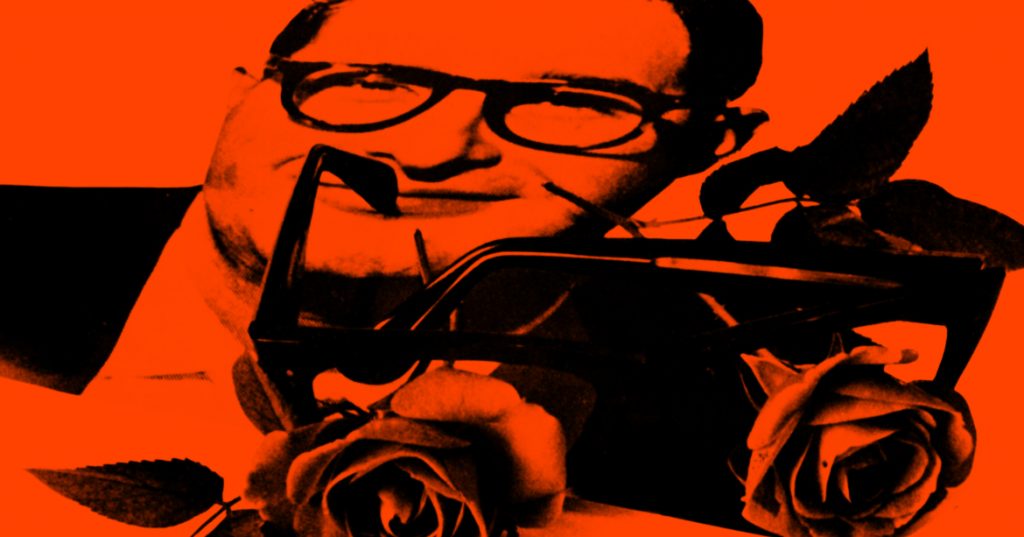
Cyril Bennett has now been director of programmes for five months. It takes time before new ideas and policies can be seen to be reaching the screen. Some have arrived already, others are in the pipeline. In the meanwhile, he answers here nine questions about programming.

1. What kind of programme fields would you like to see us entering more strongly ?
In a sense we anticipated this question in January by the appointment of Buddy Bregman and Peter Eton and also by the brief which Peter Willes has for 1966-67 plays. Music, stars and comedy are the short answer on the entertainment front. As far as plays are concerned, I feel we ought to be reflecting more the quite unique position we have in ITV. This is our proximity and involvement with the London theatre. It is logical that the London station in the heart of theatre-land should shape and direct its play output accordingly.
2. Is the single television drama dying?
No, and the evidence of this belief is in the transmission this month of Arthur Miller’s A View from the Bridge’. There will be other similar important single play productions in the future.
But I believe nobody has really challenged the assumption that plays have a natural place in television. Somehow, it has been assumed that because drama is a part of entertainment and art, it has an automatic place on television. This is not supported by the facts or common sense. It is not a common working-class or even middle-class experience to go to the theatre. It is therefore dangerous to assume that it is common practice to watch drama on television. Public affairs and documentary television have had to create interest in these areas of broadcasting. Similarly, television drama has to create a new interest in the theatre. Single plays need a sense of occasion, similar to that experienced when one goes to a theatre for an evening out. We must do more to stimulate the viewer and create this sense of occasion.
3. Do we get too much politics on the screen?
No, we can’t have too much politics. But perhaps we do have too many politicians. Politics aren’t (and shouldn’t be seen to be) dry-as-dust debate. Politics enter every field of human activity. The pre-Christmas ‘This Week’ item on poverty-stricken families was a human interest story. It was also a social story and, therefore, political.
4. How do you see documentary programmes developing?
Documentaries are in a critical phase. When public affairs programmes like ‘This Week’, ‘Division’ and ‘Shop Talk’ largely concerned themselves with short items, then there was some validity in having one-hour documentaries covering subjects in length and depth and using techniques which the magazine programmes neglected.
Now there is a trend in current affairs programmes to make more considered studies of single contemporary themes. So now we must re-think what is put into a documentary. The problem faces all broadcasting organisations. One answer lies in encouraging producers and directors to make more ‘personal’ documentaries by taking a subject and illuminating it from a personal view. (Any self-indulgences, of course, must be kept right out.)
If the subject is strong enough, this might be developed further by tackling different aspects of it in different ways, and by spreading the results over consecutive weeks, so that the total may be three or four hours of transmission.
5. Do we have enough sport?
Sport is an area of television where we must apply very strong discipline. There is danger in making wild assumptions about it. Because it exists, people seem to believe that it must also automatically be a staple part of television. Sport, however, is a minority activity in television terms, despite the ‘vast’ crowds that are said to attend major sporting events. From the company’s point of view, major midweek sporting activities are limited. Further, while we are subjected to the absurdity of short licence periods, we are inhibited in making arrangements with athletic associations, race courses and so on over a long term. But we must be alert to make sure we cover the best and most important sporting events. We must also attempt experiments with new techniques for covering sport, and not always adopt the conventional way.
6. What are your views about the long running series such as ‘No Hiding Place’ and the quizzes?
Firstly, these are popular by any objective criterion that a reasonable man, and not an intellectual snob, would apply whatever his personal view.
Secondly, the criterion is not whether they are old or long-running, but whether they are valid programme material in their own context. Nobody pretends they are high art. Third, I would not classify ‘Take Your Pick’ and ‘Double Your Money’ as quiz shows. I think the audience watches them because they are hosted by popular entertainers. I personally haven’t much time for the question-and-answer quiz shows which depend entirely on the contestants’ knowledge of the longest river in the world. That hasn’t got much to do with television.
These long-running shows will be replaced when we have got something better to offer. I’m preoccupied first with creating programmes, not destroying them.
7. What are your views on press criticism of programmes?
Critics can play an important and a constructive part through trend analysis. An example of this was the almost universal assumption by reviewers that the television link-man was an obsolete figure. They came to this conclusion before viewers had realised it and almost before the managements in television had realised it. They made the removal of the link-man acceptable and thus helped in a decisive step. But a critic’s view of last night’s programme has not more value than your mother’s.
8. How far do TAM ratings affect your judgements?
Except for the chap who likes to talk to himself, we all want an audience – especially programme-makers. TAM just means television audience measurement. It is a useful and efficient way of measuring audience response. It shouldn’t be used to motivate action or decisions.
9. Anything else you’d like to say?
Yes. We need all the teamwork and ideas available. We’re going to get up and go.
About the author
Cyril Bennett was controller of programmes at Rediffusion, and was involved in early London Weekend


