Bottled snakes and docile crocs
Rediffusion sets off to explore Australia
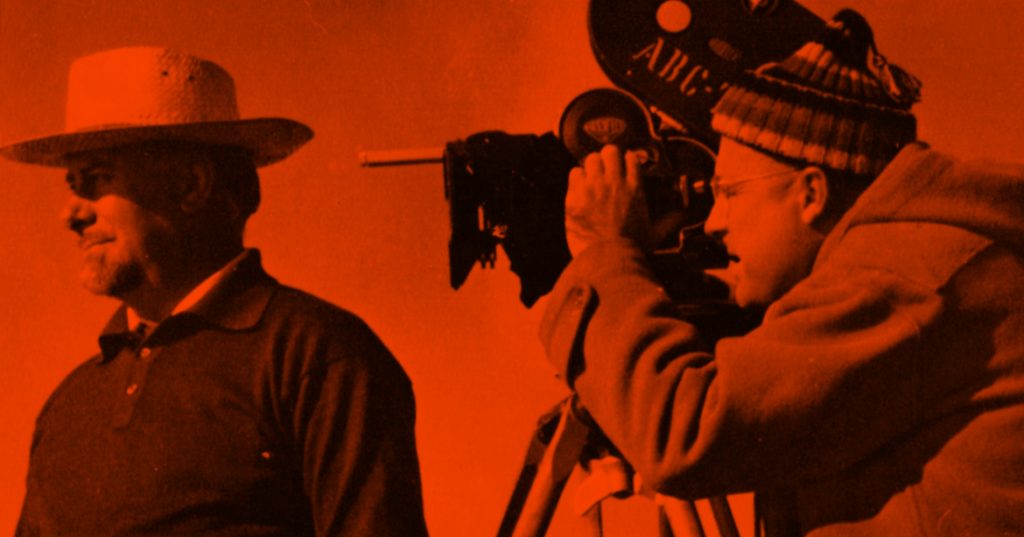
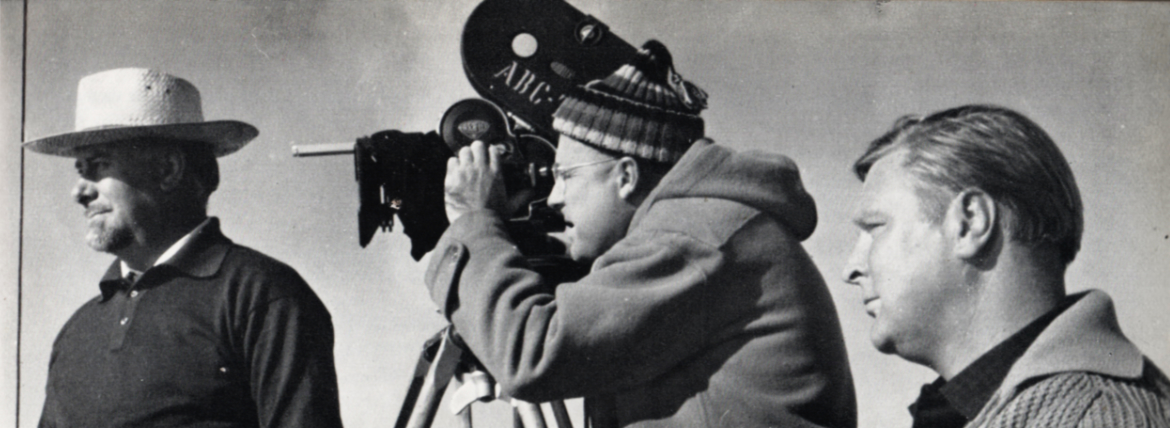
Dan Farson, Rollo Gamble and David Kentish spent four months in Australia earlier this year filming material. They covered more than 12,000 miles and took in Perth, Adelaide, Sydney, Melbourne, Brisbane and Cairns.
The hour-long documentary ‘Strangers in a Strange Land’ which was screened last month was one result. Another was the series of 13 programmes, each 15-minutes long, entitled ‘Farson in Australia’ which are now being televised. A third result is these two articles – the first by Rollo Gamble and the second by Dan Farson.

Every time I go round the world I find it larger and larger. I do not believe in all this nonsense about it getting smaller. And time, what has time got to do with it? It is only confusing. It is metabolism. People assured us: ‘It’s a stone’s throw’ to Australia, you’ll be there in a few hours’. But we were grounded for the night in Rome, missed our connection for Perth in Singapore and were re-routed from Singapore to Perth via Sydney, a diversion costing us a mere 5,000 miles extra flying … when I got there I felt I had been rocketed to the other side of the Moon.
It was frightfully hot, we were sweating copiously, our shirts and slacks soaking. I remember David’s shirt, a sort of poison bottle green with great black patches of his sweat. My own state was hardly more attractive and Dan, I think, had gone into some sort of mystic trance induced by heat and boredom.
Down below, crossing Australia from Darwin to Sydney, lay a parched landscape, a pattern of dark grey, brown and ash, with a network spread over like capillary veins, where water had once flowed millions of years ago. I looked for hours in search of some sign of man … not even a road or track … none was apparent. One got very thirsty looking at this. We longed for a taste of the famed Australian beer at Sydney airport, a shower, a shave and all the other things necessary to freshen us for the 2,500 miles on to Perth.
But not to be. Three dishevelled 200 pounders were seized by a pack of journalists, their bags thrown at the customs man who was given hardly time to make his chalk mark, and ushered up some stairs to a private room with a trestle table loaded with drink. Thank God, in a way – but no wash and shave.
Thank God, they were only interested in Dan who, already at the point of exhaustion, was interviewed, photographed and filmed until he was almost fit for the undertaker. David and I were able to recover partially via the refreshment table.
After about an hour of this I became quite light-headed and we were shovelled on to our plane for Perth not caring. I remember Dan outstretched on the floor of the lounge trying to get some sleep and David and I playing a couple of Australian business men in a hilarious game of two-up, joined eventually by the two air hostesses, while Sir Matthew Slattery, the chairman of BOAC, slept, we hoped, in the seat ahead of us.
In the first few days, perhaps because I was unhinged by flight, the people looked strange and consequently so well worth filming … the hard-glazed eyes and the crocodile-skinned necks of the middle-aged … the rangy, slender limbs of the young people, and their brows seemed to join in one bar across their foreheads … the beautiful unself-conscious gaze of the young girls and the sudden effect of summer dresses. Boys swinging dangerously from the girders of an iron bridge and dropping into what I supposed to be a shark-infested river, young men playing cricket in a riverside park shaded by huge magnolia trees with such abandon as to make the game seem almost exciting. And in the river were black swans.
That shining city, Perth, with its curving Swan River and its miles of surf-pounding beaches. Once Dan and I only ten yards from shore, could not get back. We looked at each other swimming frantically and pretended we were not in difficulties. When we made it eventually, we both confessed to having been scared stiff. I have bathed in many parts of the world, but do not remember such a powerful swell and undertow. The Australians understand these waters and do not try to fight them … one sees even three-, four- and five-year-olds washed up like shoals of fish in squealing piles on the beach, their parents a few yards away oiling themselves – unmoved.
The first few days I staggered down to breakfast, my head bulging with impressions, and ordered (trying to get into the swing of Australia) a T-bone steak and a bottle of Swan beer, ice-cold and very fizzy. This is a hangover from sheep station days perhaps, when men were out at dawn and back to a huge breakfast about nine. One read porridge, bacon and eggs and choice of steak, chops and mixed grills on the menu. Soon I began to burst all seams and quickly reverted to my tea, toast and fruit-juice regime.
First impressions are so strong and never recaptured … alas we had no camera to film with in those days.
We were on a whirlwind reconnaissance to try to find 13 stories geographically distributed between the six states. Our brief was to eschew the outback … too much had been done about that hitherto, and we were to show urban life and sophistication. The Australians are terrified of being taken as uncultured, rough and rustic … their terror amounts to an inferiority complex; on the other hand they pride themselves on their toughness.
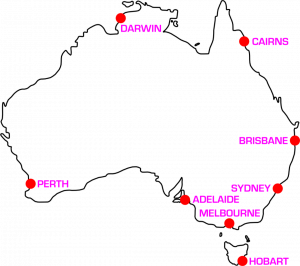
So our itinerary took us to the cities … Perth, Adelaide, Melbourne, Hobart, Sydney, Brisbane, Cairns … a most exhausting six weeks, watching the wonderful summer weather change to autumn, anxious not to encounter winter and rain on our return, seeing wonderful opportunities which we were unable to film because of planning.
One cannot dispute the necessity for planning … without it economy is impossible; but I wonder if a day will come when apparatus can be carried in a small suitcase, set up in 20 seconds and those marvellous fleeting instances of life caught for ever for the television screen … a dream? By the time I got to Cairns in the north-east corner of the continent I was in a frustrated dither. The film unit arrived from Sydney and we started filming just after Easter.
Somehow small aeroplanes were at our disposal and we were able to fly over the startling beauty of the coast at Cairns. I remember flying to Green Island at dawn, the sea oyster coloured, a brilliant sheen penetrating a curtain of mist disintegrating into minute spheres chasing each other across our windscreen.
Pointing our camera wc dived at this island, hoping for a perfect zoom … a story-book tropical island looped by a coral reef visible just beneath the surface, chalk green and indigo … in fact part of the Great Barrier Reef. But the morning sun caused erratic currents of air, the pilot could not hold our ’plane steady and our shots were spoilt.
Then, flying down that narrow valley through the mountains rising hundreds of feet on each side of our Cessna, thick green forest below, very tropical, the pilot pulled back the stick to climb over a saddle and all at once revealed those powerful headlands, golden beaches, belts of sugar cane for miles along the coast, and a cobalt sea merging without horizon into the sky.
I was allowed to fly the aircraft for about 10 minutes, I mean hold one of the dual controls. We seemed to be climbing vertically … am I wrong or were we for a moment flying on our backs backwards? The pilot next to me was dead pan, but Dan on the seat behind looked sick. He said as we revived him later that at that moment he was convinced we were going into a spin and the tour would end in scattered wreckage and bones in the gum tree forest.
Australian film units do not belong to a union but owing to their overtime regulations our unit were earning far more money than we were. Of course this may have influenced them, but I was impressed by their stoicism.
When we were in Wairuna, one of the smaller cattle stations (some 400 square miles, whereas a good-sized station can be from 4,000 to 12,000 square miles) they slept in a garage on hospital beds with hot-water bottles provided by our remarkable unit manager and treasurer, Bob Walthy.
Bob not only saved us hundreds of pounds by brilliant transport arrangements throughout the tour, but looked after our comfort so solicitously we were very soon unable to take a step without him. We called him ‘Mother’ and sent him a lace-edged card for Mother’s Day.
The Atkinson family who kept, ate, talked and thought cattle, were truly part of the heart of Australia. Rising with the sun, they champed about the homestead longing for their breakfast, while we, slower to drag ourselves awake, kept them waiting. Steak and kidney stew, bacon and eggs, tea I imagine, or was it coffee (both rather indistinguishable and bad throughout Australia) but the weather was sparkling and spirits were soaring.
Bob Atkinson, the younger son, had killed a taipan on the verandah two days before we arrived. The taipan is one of the most deadly snakes in the world. If bitten I am told you have 10 seconds to live, unless of course you happen to be carrying a hypodermic and the right serum with you. We stepped warily, especially at night. But I never saw a snake in Australia except bottled in a museum and a dead one run over in the road.
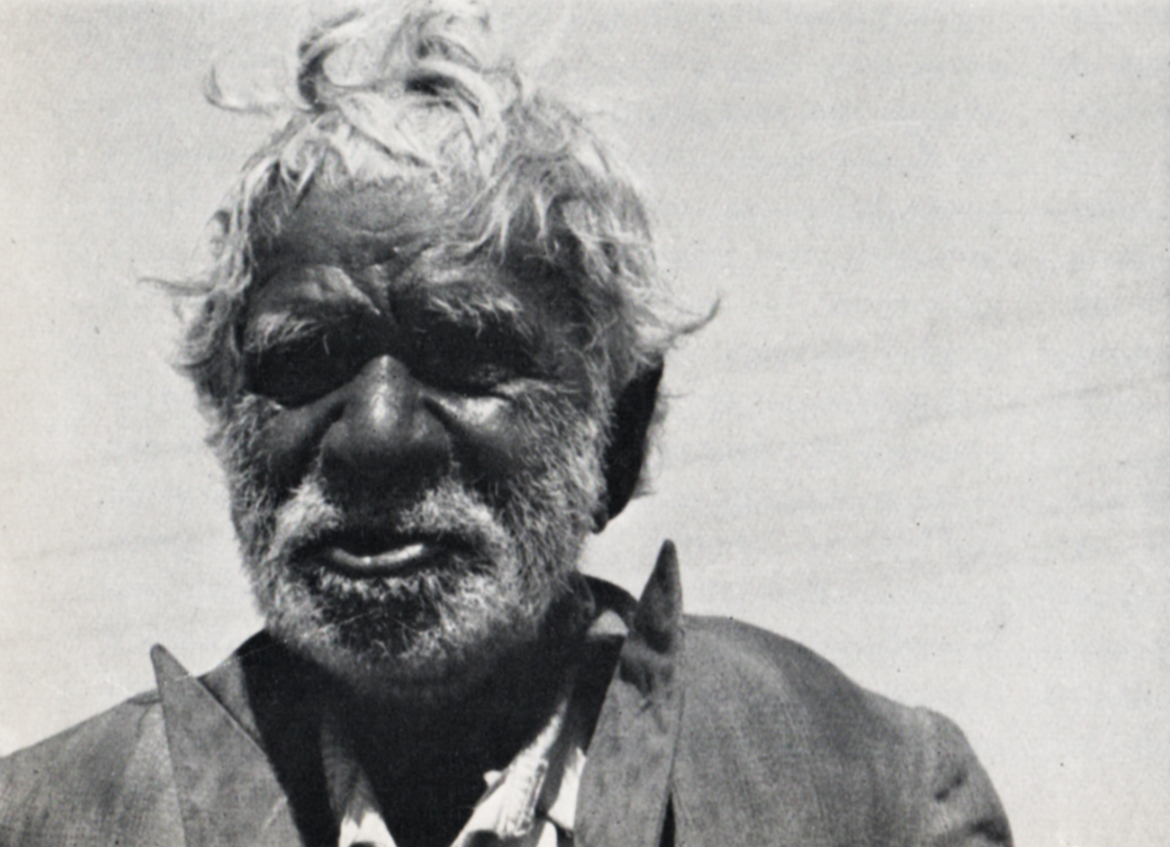
The Atkinsons look after 10,000 head of cattle and create a wonderful western atmosphere … they wear broad brimmed hats and high-heeled stockmen’s boots. They spend days in the saddle, sleeping in bivouacs scattered over their vast territory, often away from the homestead for weeks at a time.
I had always supposed crocodiles lived in fresh water … I mean in muddy rivers and swamps, but not salt water.
Apparently there are salt water crocs which are harmful and fresh water crocs which are not. We had a marvellous swim in Archer’s Creek inhabited by the latter. The crocs kept to themselves and we wallowed in water of a perfect temperature enjoying a setting which reminded me of Huckleberry Finn.
I do so envy the Australians their natural amenities. I am speaking, of course, of the coastal fringe and those areas east of the Great Dividing Range. Frequently, one comes across rustic tables put up in some perfect place to camp or picnic, and these, such is the country’s vastness, one can nearly always have to oneself.
But I specially envy them their beaches with that extraordinary surf. I must say I never entered the sea without the thought of sharks adding a sort of salt to the experience. The Australians love to scare you with shark stories but themselves regard sharks as rather stupid creatures.
There are, as a matter of fact, quite a number of shark scares on the beaches during a season. Someone will spot the triangular fin (sometimes on the grander beaches from a shark tower) the alarm bell is rung and everyone leaves the water rather bored, as we learnt to become during air raids.
A lifesaver will then take out a boat and hits the shark on the nose with an oar. This usually sends the shark away and bathing is resumed. Occasionally someone is taken by a shark, probably two or three in a summer, and it reaches the headlines, but the loss is negligible compared to those killed on the roads.
The toughest period was in Sydney. At one time we were trying to film five stories at once. I must confess at times I was not quite sure which story I was shooting. In the end the material separated itself into different themes.
I thought the expense of Sydney horrifying. On the surface a lively sinful town, I found it on closer inspection a little pious. The night clubs, for instance, seemed to me over publicised, over expensive and tame. There is a vice squad which can pick a man out of his car in a main street for kissing his girl goodnight. One senses a cleaning up process and that the puritans have the upper hand. But I must add the Australians I met were far from puritanical.
How we longed to explore the outback.
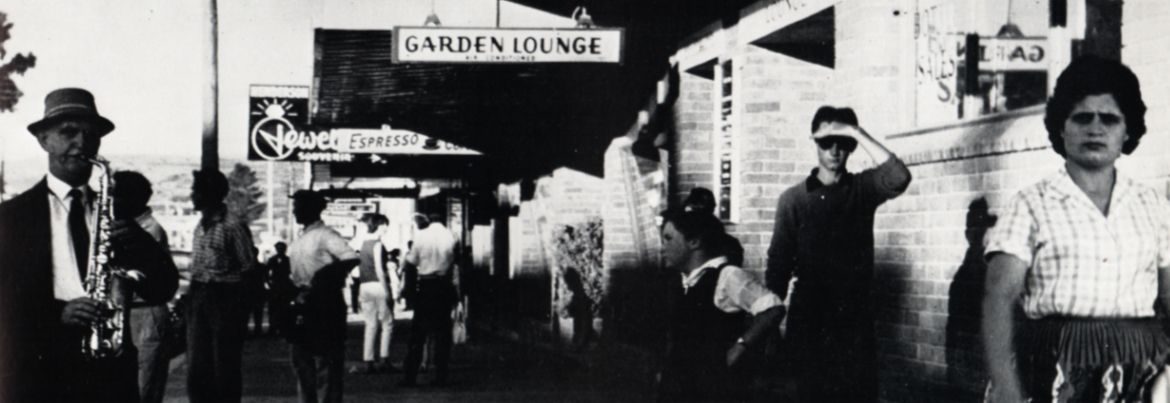
I think the series really got going in Cooma … a wonderful, jumped-up village boom town as a result of the great Snowy Mountain irrigation and hydro-electric scheme, truly a symbol of the spirit of New Australia. They are conserving water in vast quantities, changing the course of rivers from east to west, and generating huge electric supplies. The majority of the workmen are New Australians, a term meaning immigrants from Europe and Russia.
Curiously, owing to the White Australia policy, there were very few coloured workmen, I am told three or four Indians. The village has three nightclubs, innumerable continental restaurants and, of course, pubs every three yards down the main street. It was difficult to find a location to film which was not a pub. There is gambling and all sorts of pleasures concentrated in a small area … ‘My word’, as the Aussies say.
It is time I said a word about the Australian crew … a humorous and eccentric lot. Butch, the cameraman, had been six years with the BBC and was filled with their professional expertise … everything was so filtered at first as we watched rushes, it seemed to be moonlight … particularly Dan’s links … so much so that we were thinking of trying to clear ‘Moonlight becomes you’ as a signature tune.
However, on our own projectors here in England the stuff seems to be daylight … something dim about the Australian equipment. Geoff Daniels, a Welshman, in love with the most fascinating air hostess, an ex-Pinewood sound man, gave us the most wonderful service in appalling conditions. I mean conditions always are appalling for sound men on this kind of job. His relations with the camera crew got no worse than they ever do.
Ray Alchin, the boom swinger, who had never swung a boom in his life before and who had never been out of New South Wales, let alone Australia, was rather forward in many unexpected directions.
Then there was that Anglo-Indian charmer Bill Steller, a very talented artist wasting his time loading the magazines when he should undoubtedly be a cameraman in his own right. We were well and truly satisfied and, above all, constantly entertained.
I have not said anything about our own party from England … we are still speaking … I cannot imagine a more perfect combination … I would certainly do it again but I cannot tell you a half of what went on… what a pity!
ROLLO GAMBLE
The biter bit
As far as I was concerned, one of the surprises of the Australian tour was that I found myself being interviewed. The first taste of this was in Sydney, where our plane was diverted due to fog and a succession of missed connections. We stepped off the plane, unsuspecting, sleepless and brandy-ised by BOAC, to be met by the sort of press reception one sees in films like La Dolce Vita. Not expecting to meet anyone at all, we were, in fact, confronted by newsreel cameras, a dozen or so flash-light photographers, television cameras and rows of smart, tough journalists.
Questions came fast and furious. ‘Did I enjoy making people feel uncomfortable?’ ‘Did I think my job worthwhile?’ ‘How much money did I make?’ One journalist took me aside and congratulated me on ‘my exposé of “The Wedding”,’ in the ‘Keeping In Step’ series. ‘Exposé!’ I exclaimed, ‘but I thought the people were wonderful.’ ‘A most clever attack on the middle-classes,’ he persisted.
Next I was interviewed for television news by one character who glared at me coldly while I tried to answer the questions. The photographers shouted at us, ‘Have a drink’, the flash-lights exploded and finally, with evident relief, the publicity department of ABC hustled us back on the plane to Perth.
As the interviews continued, I began to learn some of the hazards of the game. Above all, never make a joke to a journalist; what might seem funny at the time, looks chilly in cold print. ‘Are you here to shock us? asked one journalist. ‘Oh, no, I said, ‘we simply wish to record some impressions of Australia’. I then added, with a smile, very feebly I must admit, that maybe we’d be able to produce ‘one or two tiny shocks’. The headline the next morning was, ‘Farson here to shock us’.
It was also difficult to know how much time to devote to this particular game. In Adelaide, for example, Rollo Gamble and I had a lengthy conference, but it was with difficulty that we found two lines of print on the back page the next day. Conversely, a fleeting remark to a journalist at an airport could somehow produce columns of quotes.
Inevitably, the questions were much the same, usually led by ‘How do you like Australia?’ As I trotted out the same old answers, I sounded like a scratched gramophone record. At the very end when nerves were frayed, I began to tell the truth – ‘There is not enough wrong in Australia,’ – this did not go down at all well. I should have realised that criticism is the last thing anyone expects or wants.
In Melbourne I had my first grilling from a television panel in one programme. As my two interrogators were sharp, wide-awake journalists, I was a bit apprehensive, but the moment the programme began they were transformed into wax-work figures – which proved even worse. I made my first radio talk in a programme called ‘Guest of Honour’, and one morning in Melbourne three separate radio stations sent people to interview me in my hotel bedroom. I found this experience entertaining, though the effect of the last broadcast was slightly marred by the fact that the tape recorder had been on playback throughout and not a single word was recorded.
In Sydney I had a live radio interview with a remarkable personality known as ‘Andrea’, a sort of Australian Louella Parsons. ‘Hello, Mums,’ she gushed, ‘guess who I have seated right here beside me! Someone with a hair-cut just like Prince Charles. I have always wondered what went on in that head underneath.’ I was about to ask if the last remark referred to myself or Prince Charles, when we were interrupted by heavenly chimes and a tooth-paste commercial was relayed from the booth next door.
On another occasion a journalist asked me if there was any type of person I really disliked. ‘Yes,’ I exclaimed, the English deb set, the officer type with the “la-dee-da” Oxford accent’.
‘But that is exactly how you strike us!’
The last interview I had was the only one in which I actually lost my temper. After a gruelling week we arrived in Perth late at night and I asked the hotel to let me sleep on late. I was woken at 6.30 a.m. to be told that a woman journalist was waiting downstairs. I asked, sleepily, if she could return later. The next thing I knew was that she had forced her way into my hotel bedroom. ‘Would you say a few words?’ she asked. ‘My God! I would,’ I exclaimed. ‘Wait a moment until I put on a dressing gown’.
We exchanged words in the corridor and her column that afternoon began, ‘He looks such a nice pleasant man on television … But my first impressions of British television personality, Dan Farson, today were neither pleasant nor nice’.
However, I must admit that my heart eventually melted and she did continue… But after 20 minutes I had changed my mind. Dan Farson is a nice pleasant man.’ This, I should add, was after two or three cups of black coffee, when I had recovered.
If my accounts of all this publicity appear swollen-headed, I should point out an aspect that is rather disconcerting. In Australia it seems to be the understudy, not the star, that is beloved. I gather that Shirley Bassey was not too successful on her tour and Vivien Leigh has attacked her luke-warm reception in Melbourne. The big name in Australian television at the moment is Digby Wolfe, who was never top of the bill over here.
The star of ‘Suzie Wong’ in Sydney was Jackie Chan, the understudy here. Completely unfamiliar with Michelmore, only slightly acquainted with Dimbleby and Freeman, it was Dan Farson, who found himself a star in Melbourne.
DAN FARSON