Profile: Enid Love
Meet Rediffusion’s schools television pioneer

It is early 1959. Morale in schools section is at a low ebb. There has been no official head of schools for nine months. No one quite knows what his responsibilities are. Quality of programmes varies from magnificent to atrocious. Above all, many of us in the section have the impression that no one in high places really cares.
In fact, the impression was mistaken. A great deal was going on at that time behind the scenes to improve matters – including offering the post of head of schools to Enid Love, in charge of schools television at the BBC.
Some people may have been anxious at the prospect of a woman as boss; all of us were slightly afraid that she might bring too many stuffy Corporation methods from the Other Place.
And then suddenly one afternoon, when a lot of us were more than usually depressed, Enid Love was shown in and introduced to us.
‘Oh yes, Martin Worth’ she said, ‘I did enjoy your programmes on “Twelfth Night”.’ To Randal Beattie: ‘You produced those wonderful films on the “Dordogne”, didn’t you?’ And so on to each member of the section.
The effect was instantaneous. Here was someone not only from outside, but from the rival camp, who not only knew who each of us was as soon as we were introduced, but who had seen and considered our work; and this at a time when one could have met many people in Television House, where we’d all worked for nearly two years, who even if they knew we were in schools would have had little idea what we did there.
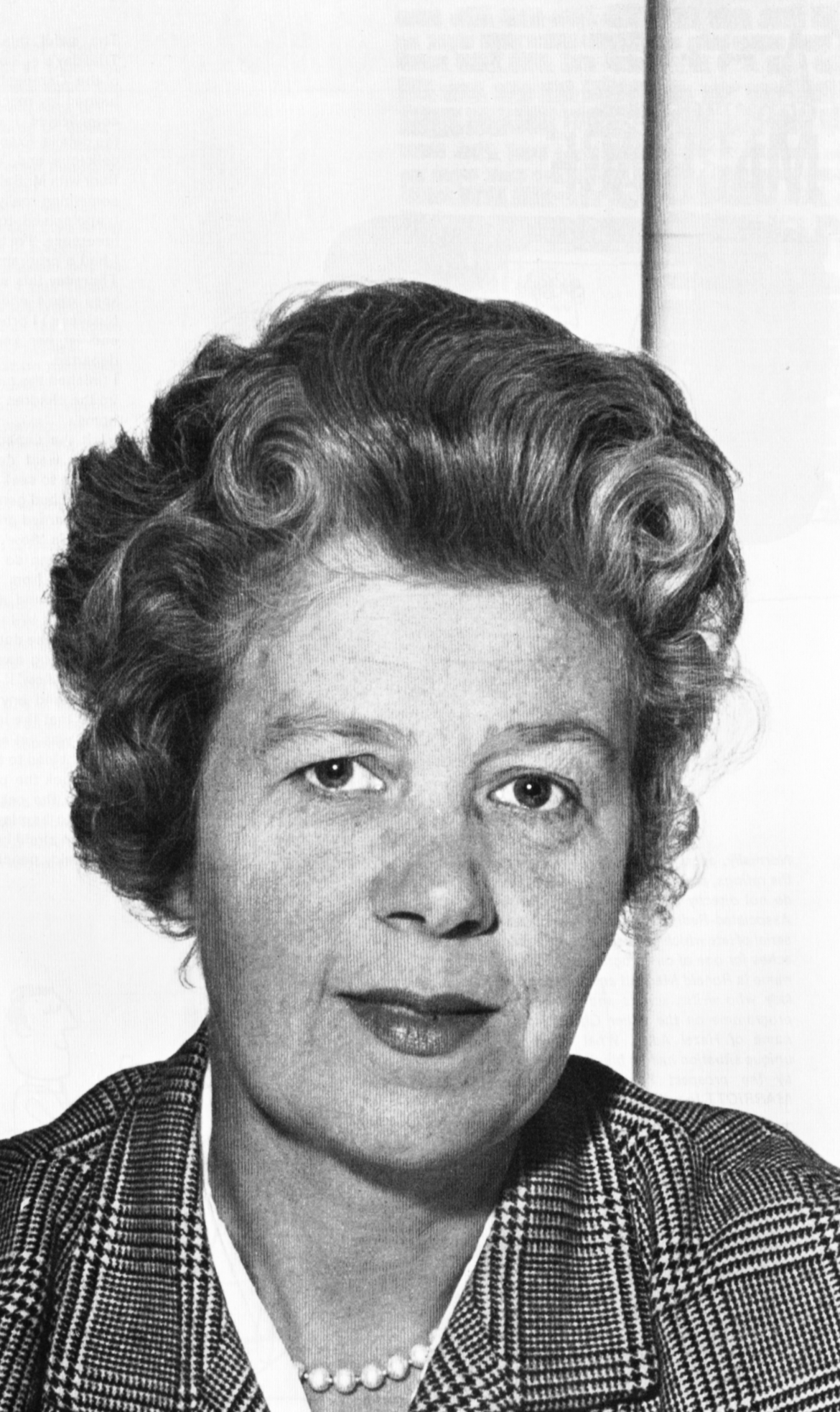
Did she mean those pleasant compliments when she met us? I don’t suppose so. But the ability to say the right thing at the right time in the right way is one of Enid’s strongest assets; and it showed us then that she knew how isolated some of us felt.
This understanding of our problems endeared her to us immediately. She had, in fact, been watching our programmes from the very beginning, even before she knew she might one day be in charge of them. So she was thoroughly familiar with everything we were trying to do.
She was also a fully qualified television director who’d produced many programmes from the box and so appreciated directors’ needs and problems. As the executive head of schools TV at the BBC, she had been taking part in just the same crusade as we had. And as a former teacher with years of experience in state schools, and with wide knowledge of and contacts in the educational world, she knew more about what was needed than anyone else.
In other words, she was, in both education and in television, a professional. And that is just what schools needed – and appreciated. This is no place to outline Enid’s achievements at A-R. Enough to say that she turned what was once the company’s problem child into a sturdy, growing youngster who just had to be taken seriously by everyone – not only in Television House (everyone knows what we do now), but in the schools themselves, in the press, and in the educational world at large.
She pioneered programmes for primary schools, introducing ‘The World Around Us’ and making it the enormously successful series that it is. Still ahead of the BBC, she introduced the first schools modern language series, ‘Chez, les Dupre’, whose success in the classroom was soon followed by its success with evening viewers and audiences in many countries overseas.
In her three and a half years at A-R the number of schools taking our programmes went up from hundreds to thousands, and it wasn’t long before other ITV companies were clamouring to join the educational TV venture that A-R had started. It was largely thanks to Enid that the tremendous problems of networking schools programmes produced by different companies, each with their own educational advisers, were overcome. And having achieved so much, Enid decided to leave.
This is in some ways typical of her. More than once she has taken on a most difficult job, tackled it successfully and then looked round for another field to operate in. Way back in 1944, after teaching in various state schools under the most difficult wartime conditions, she became head of a girls’ grammar school at Wokingham. The new Education Act had just been passed: the very role of the school was in question. With the war still on, most of the school premises were scattered through the town and conditions were discouraging, to say the least.
But as soon as she’d made it a properly organised school and increased its pupils from 150 to 400, she left to do something quite different – as an education officer for the BBC.

It was an exciting new challenge, and she thoroughly enjoyed the opportunity it gave her to travel to every kind of school and see for herself how the new Education Act was working. In 1951 she was persuaded by a colleague to apply for the post of assistant head of schools broadcasting at the BBC — sound only in those days — and though she was so cynical about her chances that she let someone else fill in her application form, she did, in fact, get the job.
Now, after 13 years in Schools broadcasting — radio, BBC TV, then A-R, all very different — she has left to meet another new challenge as head of a vast comprehensive school at Sydenham.
Her energy and dynamism need no further comment. But her success is also due to her ability to get what she wants from the most unpromising quarters – whether, as sometimes at A-R, let’s face it, she was after more money, more time or simply more camera rehearsal for a particular programme. How did she do it? By a mixture of professional knowledge that impressed everyone, by subtle diplomacy and tact, by hard bargaining and sheer feminine charm.
Yet what we remember her most for in schools is her friendliness and her consideration for everyone’s views. This was almost a weakness: for there were times when, to my mind at least, an autocratic decision on her part would have saved hours of unnecessary discussion. At the same time, you always knew where you were with her: she is never devious, never in any degree double-faced. Candid, open, easy to talk to and immensely sympathetic, she is for me at least one of the nicest people I’ve ever worked for.
There is a possibility that, subject to the approval of her successor when appointed, she will return to assist us as a member of the Educational Advisory Committee. But even if this does not materialise, Enid will always be around. Whatever new job she undertakes, she’s not the sort of person with whom one loses touch.