Passport to features
The people behind Rediffusion’s features output

This content is protected against AI scraping.
‘Tell us how other departments work.’ This was one of the most frequently recurring pleas in the answers to the quiz sent to sta ff with the last edition of Fusion. Various departments have had articles in Fusion from time to time and in this article by CAROLE SAMUELS it is the turn of the people who work on features.
First, however, we should set the scene.
The programme department is headed by Lord Windlesham as chief programme executive.
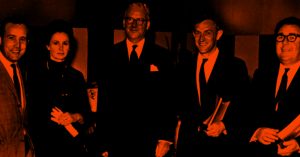
With him there are Ray Dicks as programme production executive, Cyril Francis as programme planning executive and Geoffrey Whitaker as senior technical executive. They are joined on the programme board by Guthrie Moir (executive producer, group 1, religious programmes, schools broadcasts and educative programmes), Eric Maschwitz and Ray Dicks (executive producers, group 2, scripted series), Elkan Allan (executive producer, Group 3, entertainment and quiz programmes and outside broadcasts), Cyril Bennett (executive producer, group 4, features and children’s programmes) and Antony Kearey (executive producer, group 5, plays).
All have their hustles and bustles; all have their own complicated organisations. Cyril Bennett and his merry men were almost unanimous on one point … ‘you’re attempting the impossible trying to explain us.’ The impossible starts on the sixth floor of Television House. It extends to any part of the world where there is a feature or news.
People in features have to move fast … for though some programmes can take three months to make, others may have to be produced within a matter of hours. Because there is so much to do, so fast, the demarcation lines between one person’s job and another’s tend to become blurred. But there is an overall plan.
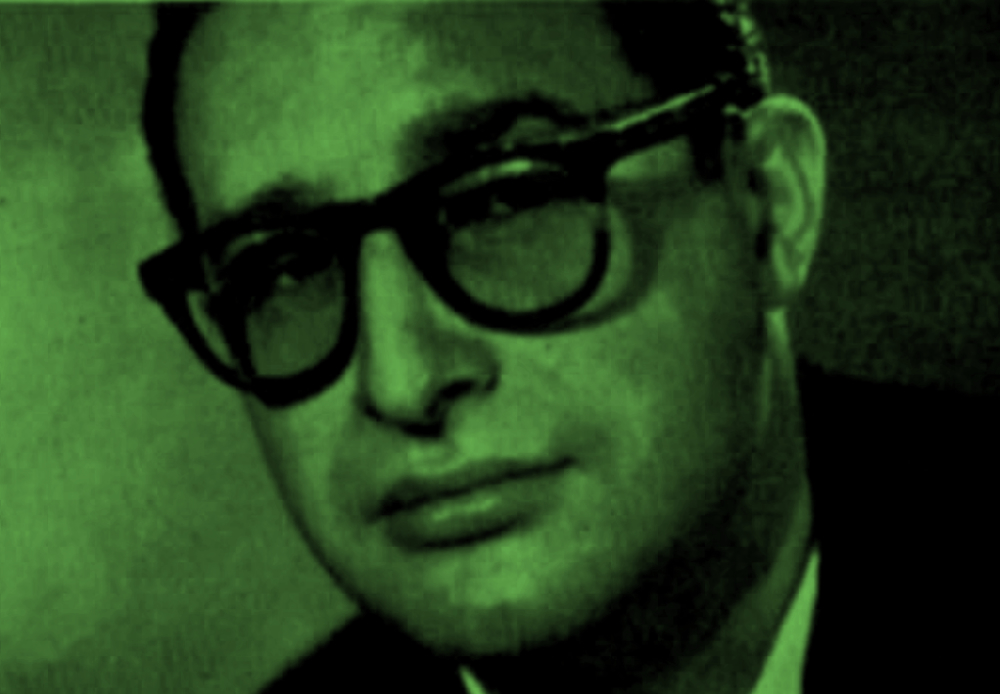
Cyril Bennett is head of features, a section containing more than 50 people. It includes producers, directors and their PA’s, researchers, reporters, a programme secretary (Gillian Morphew, the only one in the company) secretaries, shorthand typists and advisors, besides interviewers and writers who work when required.
Aged 36, Cyril Bennett has a job which demands the combined qualities of a newspaper editor, executive producer and impresario. A suggestion for a feature may come from him or his staff. It is put up for the programme board’s approval, with an estimated budget. If it is approved, work on production can begin. ‘My job is to put the right elements together – say, the right director with the right scriptwriter, the right reporter and the right researcher,’ he says, ‘then to try and make sure that the production reaches a satisfactory standard from the company’s point of view.
‘Features’ people accept one thing – if a show is lousy on the night, it’s my telephone that rings at home, and the general manager or David Windlesham expects me to have the answers. Understand that fact and you understand exactly what I’m responsible for.
‘I have discussions with directors and writers at various stages of production because, although we are working within an established story frame-work, we are dealing with changing situations and we have to be flexible in our ideas. ‘We’re dealing with reality and we don’t govern the situation: it governs us.’ Cyril Bennett began his career as a messenger-boy with the Evening Standard, then went on to a local newspaper, the Bedfordshire Times. He came to Rediffusion in 1955, as a script-writer on ‘This Week’ after spending five years with Odhams as a show business writer on Illustrated, John Bull and Picturegoer. Before that he was lobby correspondent for a group of Commonwealth newspapers.
He is married to a former photographic model, Shirley Berry, and has a three-year-old daughter, Rachel. The Bennett family, and their bulldog puppy, live in Montagu Square, W.1. ‘It’s 15 minutes from the office – as far as I can commute,’ he says.
Cyril Bennett is in charge of all the programmes put out by features. This includes major documentaries which are produced every few weeks; Intertel programmes, feature series, special ‘crash’ programmes, and current affairs programmes like ‘This Week’ which is run almost as a section within a section by its producer Jeremy Isaacs.
He is also executive producer of children’s programmes, a newly-acquired position. ‘But here I have an ideas function rather than an administrative one,’ he says. He meets regularly with John Rhodes, head of children’s section, to discuss policy, or the running of a particular series.
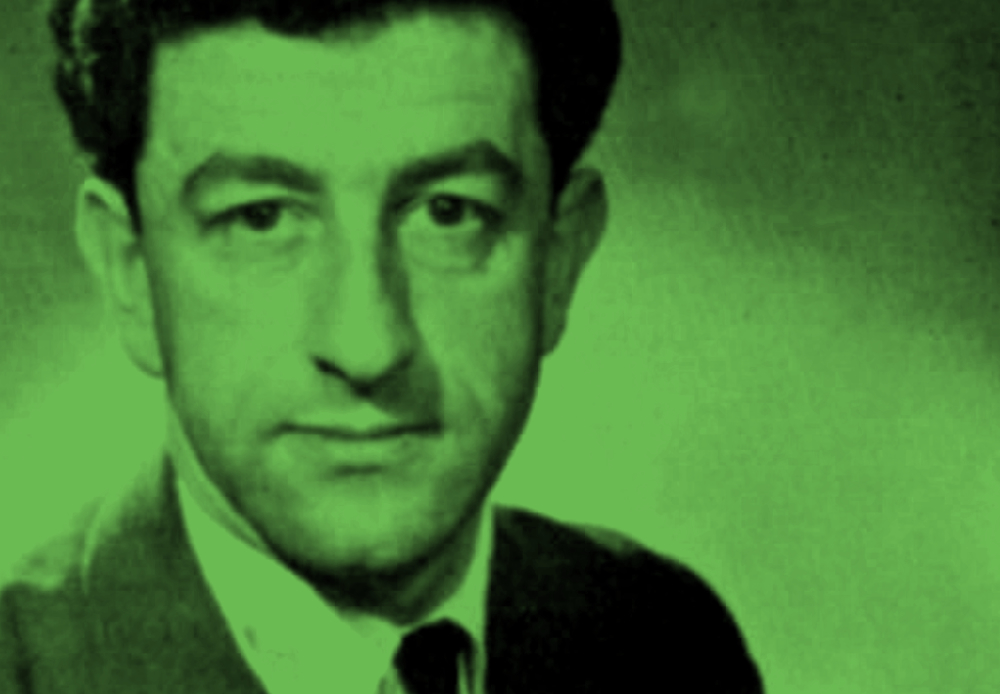
In features, creative staff are relieved of as many hampering administrative jobs as possible. Under Cyril, the section is split into four divisions, each with its own chief and his staff: technical, administrative, research and production. Peter Morley, 39, the assistant head of features, is available as technical consultant. He advises, for instance, whether it would be better to use 35 mm. or 16 mm. cameras on a specific programme and supervises trainee directors.
He is also a programme director, and deputy chairman of the Guild of Television Producers and Directors. Last year he and Cyril Bennett jointly won the Guild’s Merit Award for the best factual series with ‘This Week’.
Peter Morley started his career as a rewind boy in the projection box of the Dominion Theatre, Tottenham Court Road. He stayed there two years, then spent five years in the army during the war. Afterwards, he tried to get into documentary film making and found that the only way was to go back into the projection room and work up from there. He graduated next to the cutting rooms, and eventually became a film editor with the Film Producers’ Guild, for whom he also wrote and directed documentaries.
In January, 1956, he came to Rediffusion as a director. His first feature was a half-hour documentary called ‘Fan Fever’. ‘It showed the fan-worship for Dickie Valentine, and was an eye-opener in those days,’ he says.
His first major documentary was about trade unionism and was called ‘United We Stand’. Others he directed – with Cyril Bennett as scriptwriter and Reg Courtney-Browne as researcher – were ‘Tyranny – the Years of Adolf Hitler’, ‘Israel Rises’ and ‘The Two Faces of Japan’. More recently, he directed ‘Black Marries White – The Last Barrier’, a documentary on mixed marriages. He has also directed an Intertel programme – ‘The Heartbeat of France’ – and the only full-length opera yet screened by an Independent Television company, Benjamin Britten’s ‘The Turn of the Screw’. For more than two years he co-produced ‘This Week’.
Peter Morley is married to Jane Tillett, a senior PA with Rediffusion. They first met in 1957 when she worked with him on outside broadcasts before he joined the features section. The Morleys live in Canonbury, and Peter is a do-it-yourself enthusiast.
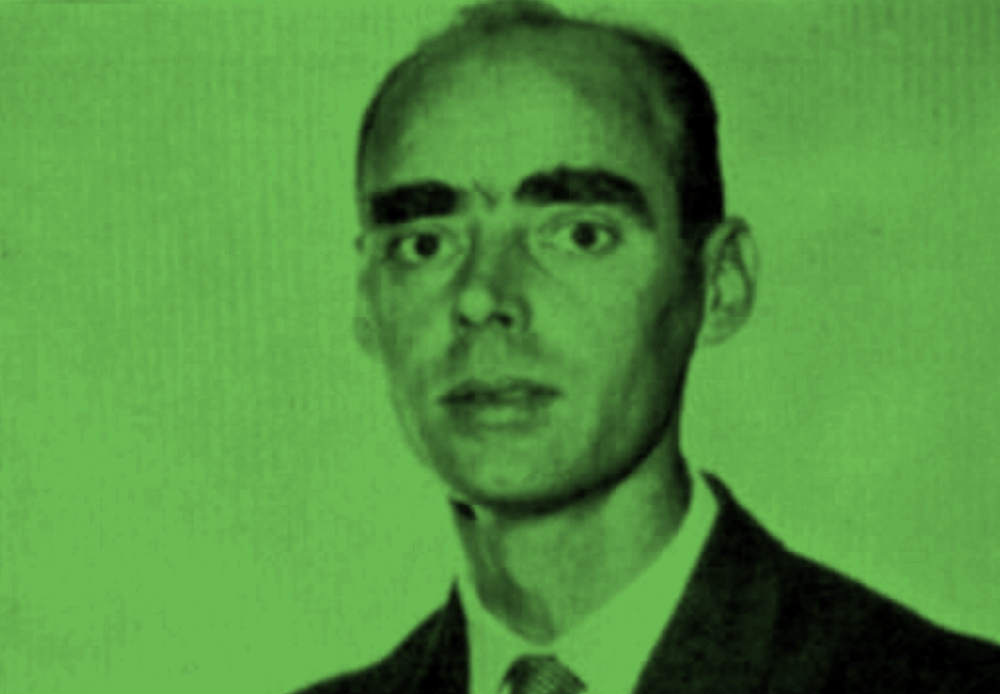
Eric Martin, as manager, features, is the section’s administrative or organisation man and is helped by an assistant, John M. Phillips. He explains: ‘While features people are making programmes, they sometimes have to deal with all sorts of awkward people – like vigilant secretaries, trigger-happy guards and resentful citizens. They must be ready to go off at short notice to places ranging from Bermondsey to Borneo. They’re not the sort of people who like restrictions or regimentation, and my job is to see to that side of things, and also to make sure they act within the bounds which the company considers reasonable.’
He has to control expenditure and schedules, and his work starts on a feature as soon as the idea has been approved and scheduled for transmission. ‘Cyril decides then whether we are going to use one of our own writers or someone outside the company,’ he says. ‘If it’s an outside writer, I must contract him for the programme.’
When a draft script has been written he draws up a rough schedule of operations. For instance, if the location for the feature is somewhere abroad, the schedule will give approximate dates and times on which individual members of the unit will leave and return to base, and their movements in between. It will show when equipment is to be sent out and brought back, and so on.
An approximate budget is then submitted to Lord Windlesham – with the help of Rediffusion’s costing department – and if agreement to proceed is given, a more minutely detailed schedule is prepared over the next few weeks. It is drawn up after discussion with the director and his team on the best way to complete the project on a reasonable budget. The new schedule lists everything from the cost of fares and insurance to the amount of excess baggage allowed for each person.
Eric Martin uses all Rediffusion’s facilities to make the arrangements necessary for a unit going on location – booking plane tickets, reserving accommodation and so on. ‘The support we get from other sections is fantastic,’ he says. ‘We do at times ask for the impossible – and strangely enough, we get it.’ During production, Eric Martin’s job is to keep an eye on the budget and see that any unexpected expenditure is authorised through his office. Afterwards he is concerned with ‘mopping up’ operations, which mostly consist of settling payments. ‘Without Eric Martin, features would come to a full stop in a week,’ says Cyril Bennett.
His very varied career before coming into television, says 40-year-old Eric Martin, has given him plenty of experience to draw on. His first job lasted a week. He mended 200 punctures for a bicycle firm – then left. A succession of jobs followed: accounts man at a garage, progress chaser in a factory, five years in the army – including one spent in the Middle East driving tanks and armoured cars, then, via a factory costing office, he went to Shepperton Studios. There he worked on production costs for British Lion films, including ‘Richard III’.
In 1955 he came to Rediffusion, where he spent a year with Future Productions Ltd, six months with costing and three and a half years as manager of the film section before joining features, where he has worked for three years.
He is married and lives with his wife, Mollie, and two children in Walton-on-Thames. His hobbies include driving, reading and doing handyman jobs about the house.
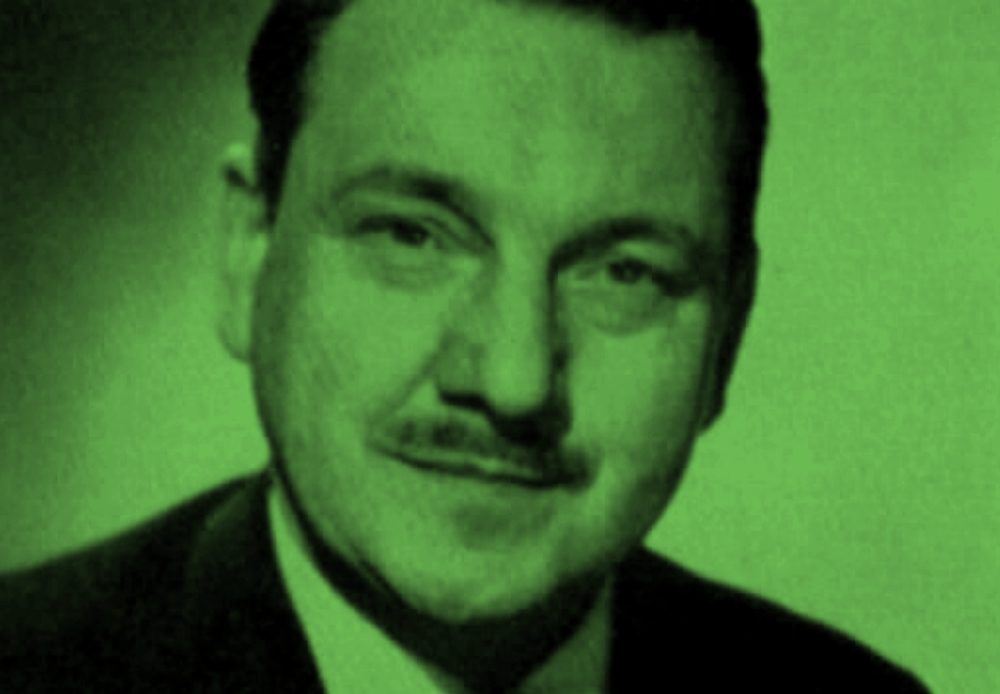
Reg Courtney-Browne, chief research editor, used to be a professional musician. He is responsible generally for programme research facilities for the section, and co-ordination of the work of the researchers. He also carries out ‘trouble-shooting’ work for Cyril Bennett.
He has built up an intricate filing system so that he can find the most unlikely information if he is asked for it. His assistant Jean Bleach works in a special features library, which contains details of all features which have been made or imported by the company, and a host of miscellaneous information besides.
Unlike Eric Martin, who is always planning foreign travel for others but only occasionally goes away himself, Reg Courtney-Browne never knows when he will have to leave his office work behind and go off to some foreign location.
He was programme organiser for ‘One Man’s Hunger’, a Rediffusion project to help the Freedom from Hunger campaign; and did the research and co-scripting for ‘The Unwanted’ a major documentary to mark World Refugee Year.
Reg joined Rediffusion in 1958 as a researcher in the production team then headed by Peter Morley, with Cyril Bennett as scriptwriter. Countries he has visited on location with the company include Germany, France, Austria, Poland, Jordan, Israel, India, Indonesia, Singapore, Hong Kong, Japan, and the USA. He also travelled a great deal before joining Rediffusion although not with the airline company where he had his first job, as a trainee, and which he left within a few months.
It was after this that he became a professional musician, playing saxophone and clarinet with a dance-band for five or six years. He continued playing even when he took up freelance journalism. At the beginning of World War Two he joined the army as a private and left as a major after having served in Europe, India, China, Burma, and – with the British Indian Division – in Japan.
He took up freelance journalism again after the war. Based in Japan, where he lived for 12 years, his area was the Far East.
Reg speaks fluent Japanese and French. He lives with his Japanese wife, Sakaye, and their 11-year-old daughter Sandra, in Eltham, Kent.
He is a keen photographer and has also had two books published, both about the Far East: ‘Dragon Recumbent’, a non-fiction work, and ‘Tiapans are People’, a novel.
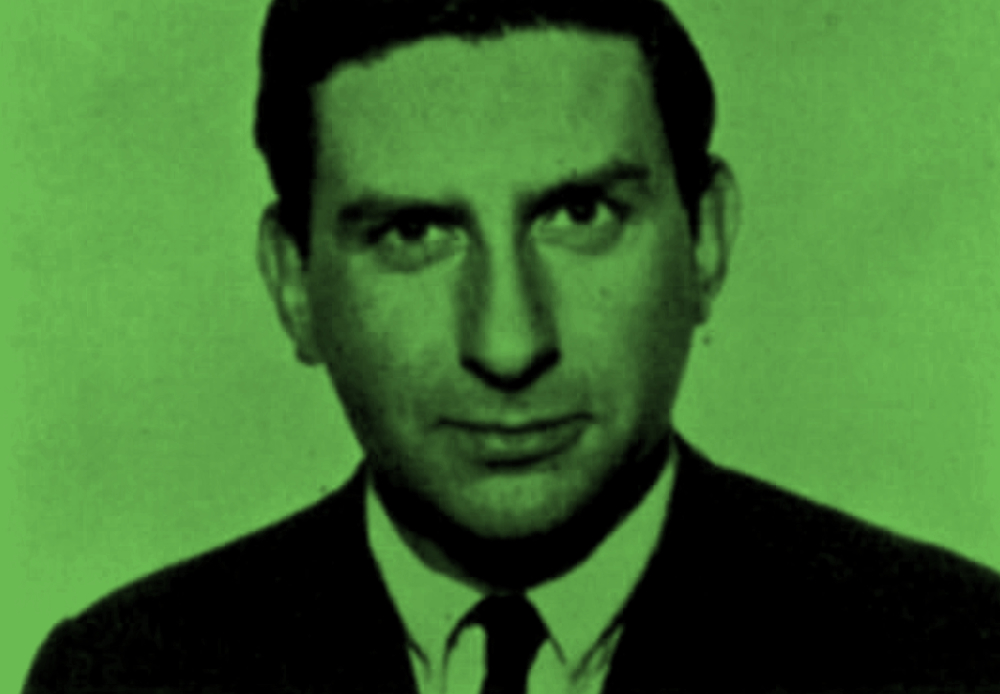
For space reasons, it’s not possible to write about every features producer, so 31-year-old Jeremy Isaacs, producer of ‘This Week’, was chosen as being representative.
He came to Rediffusion in August, 1963, from Granada, where he had been producing ‘What the Papers Say’, ‘All Our Yesterdays’ and special current affairs programmes. ‘I’m delighted now to be dealing with the news of today – not the news of last week or the last decade,’ he says.
After graduating from Oxford – where he read Latin and Greek Language and Literature, and Ancient History and Philosophy – he went into the army. He was demobbed at the age of 25, and was unemployed for five months, trying to break into journalism or broadcasting. Then he joined Granada as a researcher on current affairs programmes and stayed with the company for six years. He gets a lot of ideas for ‘This Week’ stories while in the bath or travelling by underground.
Jeremy Isaacs is Scottish-born. His South African wife, Tamara, used to be a production secretary with the BBC in Manchester. The Isaacs live near Turnham Green and have two children, John Daniel, nearly four, and Katharine, nearly two.
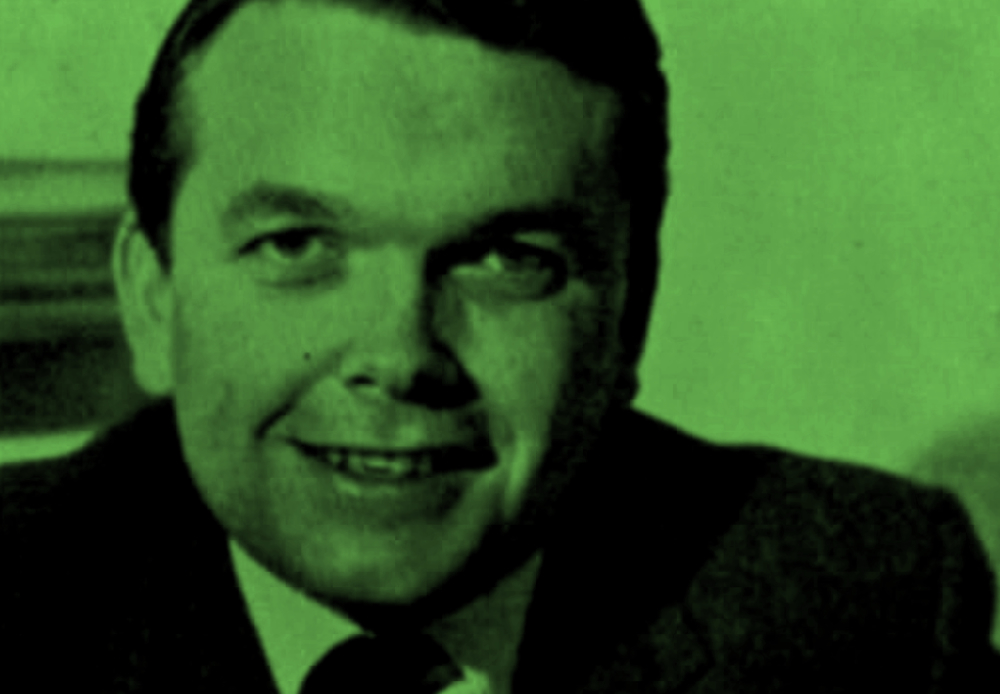
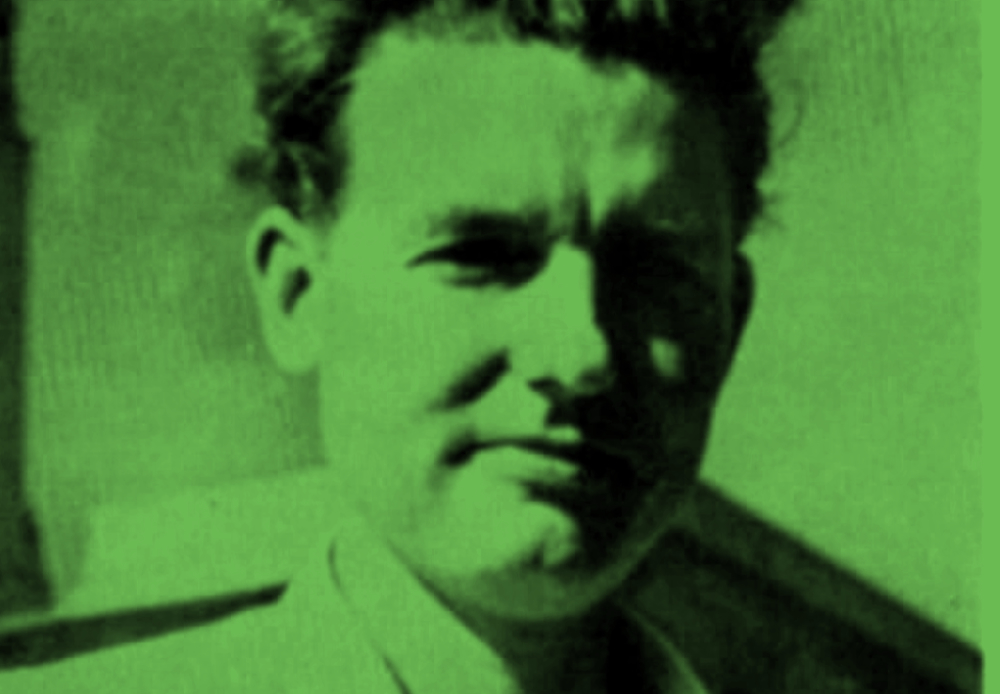
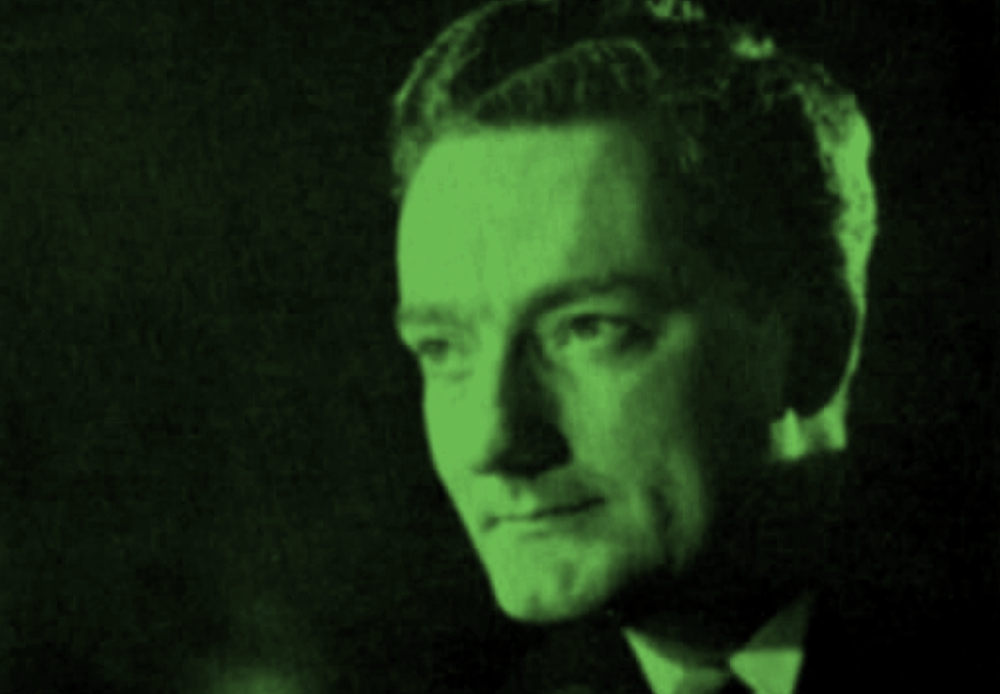
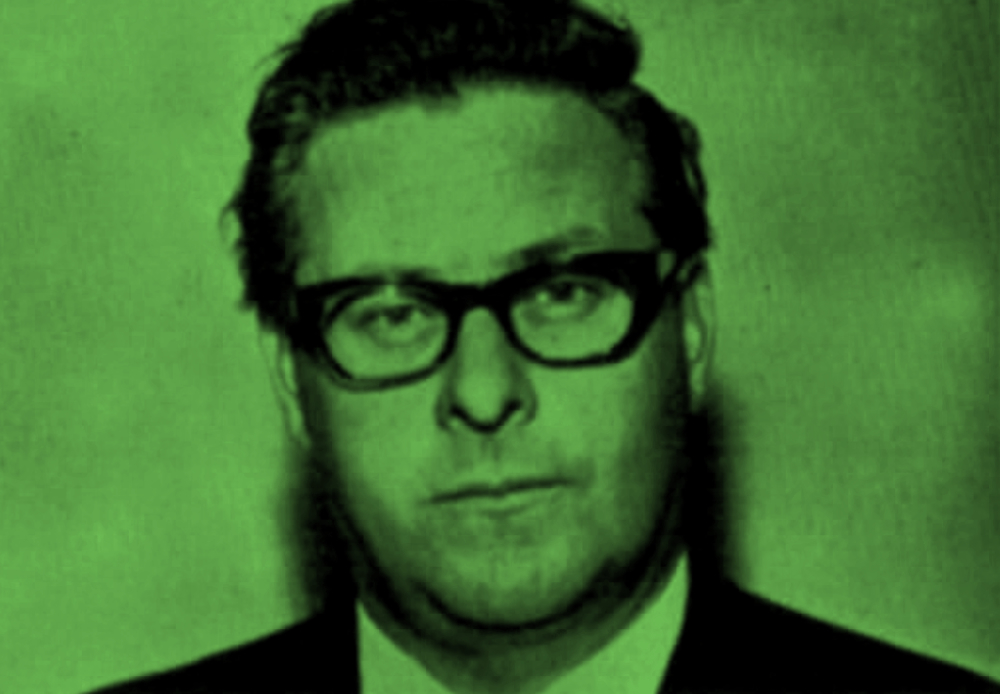
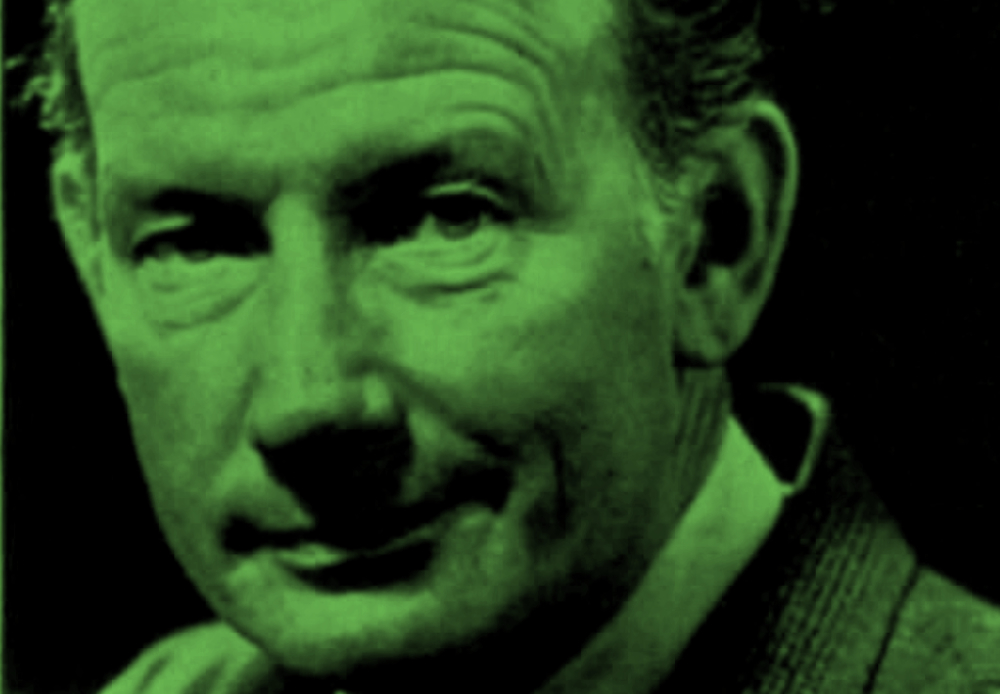
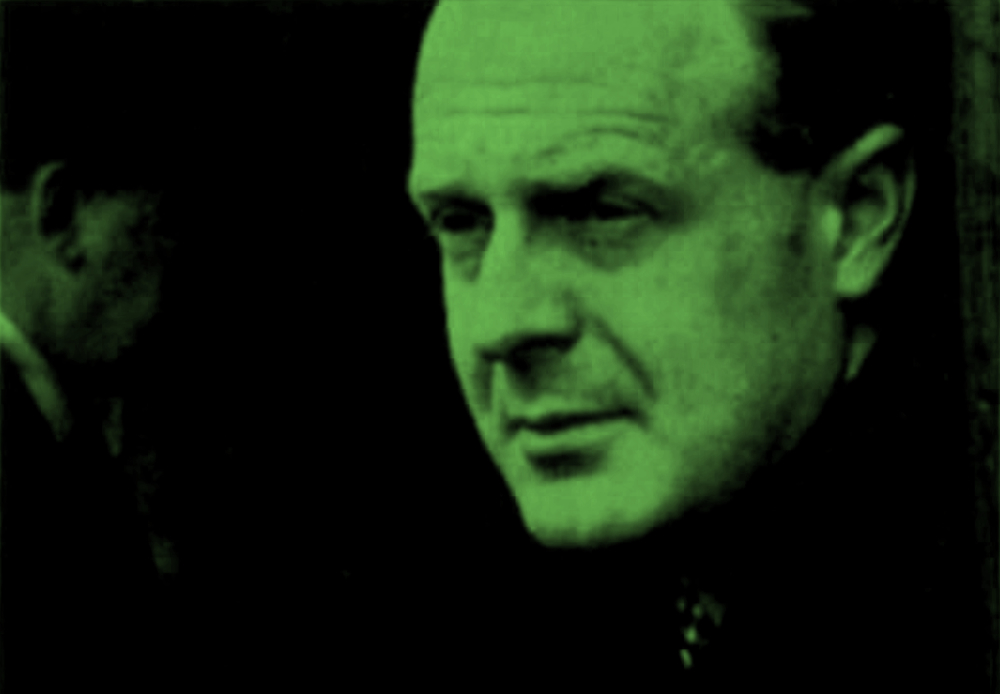
Finally there are the reporters who work on ‘This Week’ … Bryan Magee, Paul Johnson, Russell Spurr, James Cameron, George Ffitch and Desmond Wilcox. Again, it is impossible for space reasons to write them up individually, so Fusion picked on the one who happened to be in the office at the time of preparation.
He is 33-year-old Desmond Wilcox who writes science-fiction for publication, and poetry to let off steam.
Desmond Wilcox joined Rediffusion in 1960, after 10 years in Fleet Street as a reporter and foreign correspondent. ‘Reporting isn’t as glamorous as it seems,’ he says. ‘A lot of people think that when you go abroad to work, you’re really taking a holiday. When you get back they ask if you enjoyed yourself. Actually, you hardly see anything of the country. You start shooting at eight in the morning and knock off at about ten at night. If you happen to finish a day’s work in time to get back to the hotel for a bath and dinner, you think yourself lucky.’
After preparatory work with a researcher, the reporter probably visits or telephones all the people he wants to interview, and gets their opinions on the story. Then he writes his own script. If you just reeled off your questions from someone else’s script you’d be doing the job of an actor – not a reporter,’ he says. With the script written, the reporter can discuss with the director how the story can be handled visually for the best effect. Even before entering journalism, he led an adventurous life. Desmond Wilcox left Cheltenham College at the age of 14 and went to the Outward Bound Sea School. Then he served on one of the last square riggers, the Pamir, and in tramp steamers as a deck hand. His first job in journalism was as a reporter on a local weekly. Before joining the Daily Mirror, Desmond spent two years in the Parachute Regiment. He is married to journalist Patricia Wilcox and has a five-year-old daughter, Cassandra, and three-year-old twins, Adam and Claire.
These then are some of the people in features.This is how they work. Another article could be written on how they were all tied down sufficiently long to be interviewed … about all the interruptions which punctuated each interview … ‘how quickly can I get to Rome?’ … ‘how can I hire a film crew in Malta?’ … ‘where can I find out how many 40-year-old grandmothers there are in Great Britain?’ But that’s life in features.
About the author
We have no information on Carole. If you know anything about her, please get in touch.