The great soccer spectacular
The Football World Cup Final approaches and Rediffusion are ready

Most of the tickets have been sold. They went the moment 16 names were drawn from a silver cup at a meeting of the Federation of International Football Associations in London last January. Soccer fans from Burnley to Brazil are ready for the World Cup in July this year to be played out on eight grounds in England to thousands on the inside – and millions watching television.
To mark this unique sporting occasion, a unique television amalgamation has taken place – the BBC and ITV have formed a Consortium which will serve the world with live, recorded or filmed relays of matches. It’s the biggest television sports operation yet undertaken in England with world-wide audiences ranging from 100,000,000 for early round matches to the dizzy heights of 400,000,000 for the final game at Wembley Stadium on July 30.
Chairman of the BBC/ITV Consortium is Peter Dimmock, general manager, BBC-TV Outside Broadcasts Group and the vice-chairman is John McMillan, general manager of Rediffusion Television. Executive producers are Alan Chivers (BBC) and Grahame Turner, of Rediffusion, representing ITV.
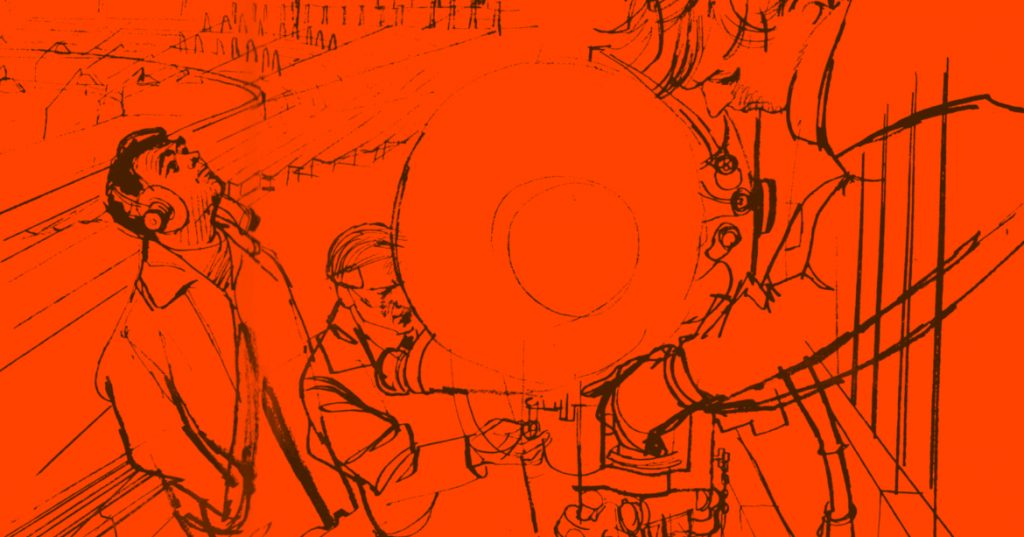
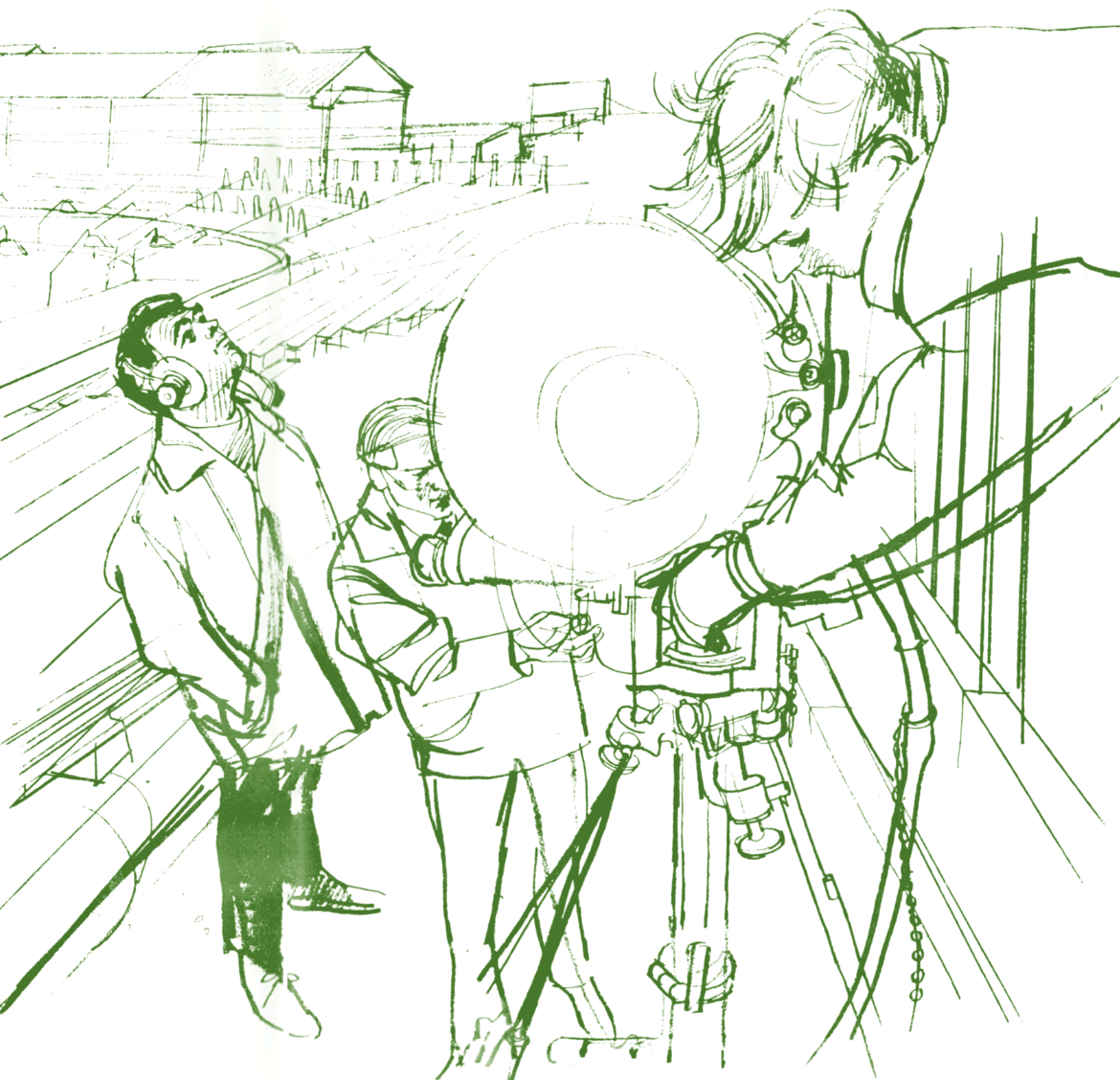
The 1966 World Cup started for 38-year-old outside broadcasts senior producer Grahame Turner more than two years ago. It was then that he met the biggest headache of his mammoth task – planning to overcome ‘natural’ obstructions on the World Cup grounds so that television cameras and commentators could enjoy a clear view of the games.
Says Grahame Turner: ‘Alan Chivers and I went on this early tour of the World Cup grounds – Middlesbrough, Sunderland, Everton, Manchester United, Sheffield Wednesday and Aston Villa. We knew that Wembley had a permanent position for television coverage, but most of the provincial grounds hadn’t.
‘We called in the various clubs’ architects and discussed the problems. What we had to avoid was “knocking out” too many seats, or too much standing space, to make room for our television positions. At Everton, the problem was most difficult and we had to work literally to inches for the best TV position. Three inches too high and it would have meant that 40 spectators would have lost their seats. Making room for three camera positions and a maximum of 30 commentators required the co-operation of everyone and I’m glad to say we got it.’
At Sunderland, renovations to the ground to make room for television resulted in the removal of a six-foot width along a stand so that cameramen and commentators could perch on the roof to cover the matches there.
‘The hard work and planning were well worth it though,’ says Grahame Turner, ‘and we’ve undoubtedly got the best positions that can be had on each ground for our purposes.’
The next sizeable problem for the BBC/ITV Consortium was to find a centre for television World Cup activities including programme and engineering facilities – a unilateral studio, master control room, sub-control rooms, areas for the installation of VTR machines, viewing rooms and a production co-ordination area giving executive television control over all grounds.
‘At first,’ says Grahame Turner, ‘we carried out a fruitless search for premises, then the BBC offered four floors of the new Spur area of Television Centre at Shepherd s Bush, London, and we could breath again.’
While the World Cup is in progress. Grahame Turner will work a nine to 12-hour day for 12 days and a BBC/ITV staff in the region of 500 will be on hand to deal with coverage of the matches.
Forty-two countries, including 25 European nations, will be relaying matches live or showing recordings or film, and video-tapes should leave London for overseas countries within a matter of hours after the end of each match. For the first time, there will be four different and simultaneous live television pictures being transmitted from England to Europe and Asia. Satellite links may also be used to send live pictures to North and Central America.
This sounds a lot and it is a massive operation with, quite frankly, the engineers having the biggest headaches. Above all else, the televising of the World Cup is a technical achievement,’ says Grahame Turner. ‘For instance, the coverage will be a 625-line operation which means quite a lot of conversion – including, of course, ITV’s domestic transmissions.’
Every World Cup day that goes by will see Grahame Turner and his colleagues feeding the latest information to television bureau managers at each ground who help commentary teams with their problems.
‘This is certainly my biggest-yet assignment for television – including the last Olympics when I was executive producer in London Fortunately Alan Chivers (of BBC) and I have worked together for years – I used to be his senior cameraman at F A. Cup Finals for BBC – and I think that has helped enormously. We understand each other and on an operation of this complexity there is less than little room for misunderstanding.’ The Consortium coverage will be shared by BBC and Rediffusion for the London games (at Wembley and White City). BBC will handle matches at Middlesbrough, Everton and Sheffield Wednesday and ITV at Sunderland (Tyne Tees Television), Manchester United (Granada) and Aston Villa (ABC Television).
And the cost?
‘Don’t ask me,’ says Graham Turner. ‘A lot. but I think that Peter Dimmock recently put the figure at more than £500,000.’ [£1.65m in today’s money, allowing for inflation – Ed]
The result of the championships?
‘Although I hope I’m wrong. I’m taking the present world champions. Brazil, to win the championship again. Not only can they play our type of football, but each player is a superb individualist too.’
But where there’s life there’s hope and although the bookies are naming Brazil to beat the world again in July. England’s supporters, whether gathered at Wembley, or round their TV sets, will be all set to cheer on their idols in the greatest soccer spectacle to be played in this country.
About the author
Geoffrey Godbert (1927-2017) worked for Rediffusion on 'Ready Steady Go!' before going on to be a published poet.